I’m home and looking forward to spending a few days with family and friends. The presents are bought and wrapped (well almost) and it’s time to just enjoy.
We all spend so much time “connected” to computers, ipods, iphones and every other device, we forget to enjoy some of the simplest things in life like a nice fire or a good bowl of soup on a snowy day. So for the next couple of days I will take joy in really “connecting” with the people I love through conversation, good food and lots of laughter.
And I will be grateful for what I have and think of those less fortunate. I’ll remind myself to be kind to others and recognize the power of that.
It’s a time for love and peace and taking time to breathe.
Perfection is over rated. In fact many times in our quest for perfection, we actually stop ourselves from our pursuits – both professionally and personally. How many times have you talked yourself out of something because things weren’t perfect? Like “It’s too cold today to take a walk” or “I didn’t get around to dusting the piano so I won’t have company over.”
Nothing’s ever perfect or like Hollywood leads us to believe. And if you buy into that – you’ll end up never quite feeling like things lived up to your expectations and being miserable in the process.
This past weekend for me certainly didn’t work out the way I had planned it to be. My daughter’s scheduled 5PM flight out of Chicago on Friday night – normally a 2-hour flight – arrived at Newark at 1AM! The two parties we had planned to go to on Saturday were both postponed because of a big snowstorm. Not my Christmas tree. And normally we would have already picked out our Christmas tree and trimmed it by this weekend but we just didn’t get to it.
Because of the snow – we didn’t make the 40 minute drive to the party we had planned to go to but went to a neighbor’s for an impromptu dinner instead. And the tree we picked out was one that hadn’t been chosen by others earlier in the month. But it did have character and we trimmed it the same as we do every year with popcorn and cranberries and ornaments that we have collected from our travels all over the world.
And on Sunday after we shoveled out, we made the 40-minute journey to the party that had been postponed from the day before. There were about half as many people there that had been invited and along with that the food that they were supposed to bring. But even though the ham was still in Connecticut and the salad was in Staten Island we didn’t really care.
Oddly enough even though none of the original expectations of the weekend were met – it was the most perfect weekend I can remember. Today the sun is shining on a beautiful pristine blanket of fresh snow – a great day to take some time and go out for a walk.
Every morning I spend an hour on the treadmill while plugged into my iPod listening to music. Sometimes the TV is turned on but with the sound turned off. I have found that just “watching” TV and in particular the commercials, is a great way to learn editing technique. I’m not distracted by the audio so I can better see how the elements get cut together.
Commercials need to get their message out in 15 seconds so the cuts are generally quick and the story needs to be told in an efficient manner. Action-reaction shots, cutaways, close-ups, sequencing – all stand out to my eye because I’m not distracted by the sound. It makes for a great lesson in editing. I notice the visual storyline – what shots are bumped up together, how long they stay on the screen and how they all make up the whole in presenting the message.
Conversely, if I have the TV on in another room (with the audio) and I’m just listening, I can usually get the message without seeing any visuals. That’s why great audio is essential – it drives the story. If people can’t hear something or understand it because the audio is poor quality, the piece fails to engage.
So try it sometime. Watch TV without the sound and notice how the story is told through the visuals and how they are cut together. It will help make you a better editor. And then try watching a video that you create with and without the sound. It’s a great way to see if you are telling the story that you meant to tell.
Maybe it started after seeing James Natchwey speak at Photo Plus Expo – the desire to create awareness with my camera. But I think it started long ago and in fact goes back to my roots and why I wanted to be a photographer. Simply put, I know that a camera can be a powerful tool in bringing awareness to a cause and with that the ability to bring about change.
I’ve always been interested in the power of the individual, those that are so passionate about a conviction they let nothing stop them. One young woman Maggie Doyne who graduated from high school with my daughter 5 years ago, decided to travel instead of going off to college. She wound up in a small village in Nepal and using her babysitting money, started a school/orphanage for Nepalese children orphaned by war. Learn more about Maggie’s Kopila Valley Children’s Home.
But what’s equally impressive about Maggie is that she speaks to students about how they can make a difference, thus planting seeds in the minds of our youth. That’s a powerful thing and each one of those people she speaks to has the potential do something that could make a difference.
This leads me to the point of this blog and how you can help. I’m embarking on an international project – to make a documentary that features people who are truly making a difference around the world. I am currently searching for those people who have a compelling story to tell. For this project, I am not looking for those who are specifically working for an NGO or some type of organization, such as the Peace Corps, because their stories – the stories of those organizations – have already been widely told.
I am searching for individuals who have embarked on their own personal projects to help make the world a better place – people who have followed their passions, ambitions, dreams, to start something that they care about. Their projects do not have to be massive or overly ambitious – it could be something as basic as restoring old churches in Russia. The people can be natives of their country or expatriates, young or old. Ideally, I would like to find 7 people, one on each continent.
So, if you know someone who is making a difference, please let me know. gail@kellymooney.com And if you don’t know someone, please pass this blog along and get the word out virally. My hope is that by using my skills to tell these stories, I will play my part in paying it forward.
If anyone’s been paying attention to my last few posts you would have noticed that I’ve been very introspective of late. That’s usually what happens to me when I’m about to make a change or embark on a personal project. I have found that when unexpected and random events happen in my life and I take notice and then question why – I’m ready for my next chapter.
I have a friend who is a freelance writer and lives nearby. We frequently take long walks through the miles of preserved natural open land that lie within our community. We are both creatives and we’ve discovered that it’s a wonderful environment for conversation and bouncing ideas off of one another. On a recent walk I was talking about an idea that just won’t leave my head and another thought that’s just starting to morph into a more concrete plan.
At one point she questioned that perhaps I should segway the ideas into assignments from magazines or online publishers – like that would somehow legitimize my effort. I told her that if I have an idea that I feel so strongly about that I’m ready to proceed on my own – then I didn’t feel the need to get validation from someone else. That my passion for the subject matter usually carried me through and was all the validation I needed.
I’ve worked on a quite few personal projects over the years, both still photography and video as well as combinations of both. There hasn’t been one project that hasn’t been rewarding on many levels. Of course there’s the personal satisfaction and growth that I initially receive. And there’s the incredible feeling I get from knowing my work has touched someone or had an impact on them. And there are always the residual rewards that lead to new connections and future projects or jobs.
Someone once told me “pay attention to those thoughts in your head that just won’t quit ya”. So I think I will.
There’s a story that I love to tell because it explains why I followed the path I did – in my career and my life.
It was 1976 and I had just graduated from Brooks Institute in Santa Barbara, California. I had my technically perfect portfolio and I was ready to set the world on fire. My plan was to move back East, and pursue my dream of becoming a photojournalist. That was where my heart was – “telling the story” through my images and I wanted to share those images through the pages of magazines. But even back then photo essays and the magazines that printed them were threatened by a bad economy and changing times. Look had just folded and Life was seeing its demise – the first time around.
Back then everyone told me that to make a living in photography you needed to get a studio and shoot commercially. I bought into that, geared my first portfolio toward that and got a job assisting a commercial still life photographer. But it didn’t feel right -it wasn’t the right fit for me. I had wanted to become a photographer to capture people and their cultures and what was going on in the world – not to shoot static objects in a New York City studio.
I had admired Jay Maisel’s work at the time, his eye for the detail and the streets of New York. I decided to give him a call and ask if he had time to look at my portfolio and maybe give me a critique or some advice. He agreed so we set up a time at his studio down in the Bowery. The late ’70’s was not a great time for NYC – economically speaking it was broke and Mayor Beame had just been turned down by the Feds for a bailout. Just taking the trek down to that part of Manhattan at that time, was an adventure in itself. Jay was a true pioneer in buying that old bank building back then. I’ll never forget the contrast between the graffiti covered exterior and amazing space inside.
Jay looked at every perfectly mounted print of technically perfect photographs and tossed them aside. He looked at me and asked me if this was what I really wanted to do. I started to go into a lengthy explanation of how I really wanted to be a photojournalist and proceeded to tell him all the reasons that I had given myself when I talked myself out of pursuing that dream. And then I took out some snapshots of things I had shot on my travels before I even went to Brooks. He looked at the images and told me that he could tell that this was what I should be doing. And then he asked me how old I was. I replied that I was 25. He looked me straight in the eye and said “You’re 25 years old and you’re already making compromises?”.
It was a turning point in my life. Every time I’m tempted to go off course, I remind myself of Jay’s words and I get back on track.
I went to see Robert Frank’s “The Americans” this past week at the Met in New York City. I have always been a fan of Frank, not so much for his fashion photography but his photographic observations of “us” – us Americans, our culture at that time in our history. He was an observer of “all” people not just the beautiful ones captured on the pages of Harper’s Bazaar, and he captured those observations for generations to come.
As I took my time looking at the prints and contact sheets displayed, I was able to get a glimpse of how he shot – what his camera lingered on and where he went from there. I could see his thought process in how he made his selections, looking at the frames circled with his red grease pencil. I read his letters to his colleague Walker Evans, another favorite of mine and I got a much better sense of him as a person and photographer. I watched an early video that he filmed and was amazed by how he pushed his own photographic boundaries into another medium. The exhibition provided a wealth of insight and information on Frank, his project “The Americans” and a time in our country’s history – and I was captivated.
His images linger in my head and remind me of my beginnings in photography and “why” I became a photographer. Like Frank, I’m an observer of all people, of cultures and use my camera as a means to capture my observations and share them with others. My passion is rooted in my own personal road trips; I have taken over the years with my camera. It has triggered in me the desire to explore, to embark on another journey with my camera and see where it takes me.
I’ve spent a career and a lifetime “on the road”, always the traveler, observing and capturing the daily lives of others – not the famous, but the common man. Not the horrific, the outrageous, the exotic for those reasons – but because they’re part of the world I live in. My hope is that I the images I leave behind, will provide others a glimpse of that time, that space, those lives that I stumbled upon during a lifetime spent on the road.
Burlesque club, Las Vegas (click image for motion sample)
I’m often asked how to prep still images and how to make them move in a multimedia/video piece. My initial response to this question is to reply with a series of questions – “Why do you want to make your images move?” “What’s your motivation? What do you want to communicate to the viewer?” “Do you need sound and movement to better tell your story?”
I’m not one to do things just because I can – I need a reason. For me a still image is an entity in and of itself – a moment in time to be studied and contemplated. When I present still images in a multimedia presentation – those “moments in time” become part of a greater whole. That new entity becomes a different visual message with sound and motion becoming the underlying spine of the piece. Added information that’s needed to convey that particular story. The still images become sequences and the sound and movement of the piece create the “feel” and “pace” of the whole.
As far as the practical aspects of creating a multimedia piece – the first step is to choose an editing software that works into your workflow. I use Final Cut Pro Studio on a Mac. I use Final Cut Pro (within the suite) if I don’t have a lot of images to edit but lately I’ve been using Motion (also included in the Studio suite) – because it’s easy – once you know it. You don’t need the depth of these software applications to create a simple multimedia piece. There are plenty of software applications to choose from – iMovie and FCP Express in the Apple family, Adobe Premiere (cross platformed if using an Intel Mac) , Sony Vegas for PC’s and simpler programs like Soundslides or Audacity.
There are many tutorials on this subject – check out Ken Stone or Lynda.com – both great places to learn. In the meantime I will share my recipe for how I size and prep my images for multimedia presentations. Like anything else, there are hundreds of ways to get to the same end – but these are my suggestions that I find work best. Another note – I use large image sizes so that I when I bring the images into my editing timeline – I have room to zoom into the images without having to enlarge them beyond 100% in the video application.
My sizing/prepping suggestions for still images:
RGB color mode
Srgb color profile for SD (standard def)
HDTV (Re.709) color profile for HD (hi def)
Tiff, PSD or PNG – better than Jpeg
Don’t over sharpen image – it will jitter on screen
Use de-interlace filter for web videos – but this is something you need to test – I don’t always like the effect this filter has.
Sizing – I always upsize my images 2.5 x needed for video timeline if I will be moving them “Ken Burns” style. Below are different specs for HD and SD and different aspect ratios:
Standard Def – DV NTSC 4:3 – 1800x1350x72 (pixels)(res)
Standard Def – NTSC 16:9 – 2132x1200x72 (pixels)(res)
HD – 720p – 3200x1800x72 (pixels)(res)
HD – 1080i – 4800x2700x72 (pixels)(res)
It’s really never been easier to prep still images in an application like Photoshop because there are lots of built in presets. I always prep all my assets and import them into my editing software before I even begin to edit. That way I don’t need to depart from the edit and lose a train of thought whenever I need to add a still image or other graphic.
Have fun – and when you do decide to move an image – ask yourself why first?
Even though I’ve been shooting motion for over 10 years, I still spend half my time shooting still images. When my story can be or should be told with images that are “moments in time” then a still camera is always my tool of choice.
For me there is a certain timeless quality of a still image. Still images are meant to be explored by the eye while lingering on the “moment” captured. Perhaps a better way to explain the power that I find within still photographs is to show you some recent images I shot.
This past weekend I visited a favorite spot of mine. It’s an old plantation in Mississippi and every time I visit, I see it in a different way. But I always see it in a timeless way – it’s like time just stopped there. Even though this plantation is worlds away from my cultural norm – I get a feeling of comfort mixed with a bit of melancholy for my own past when I’m there.
I could put these images in a multimedia format and add a narrative or a music track. But the question I ask myself is why? Will it add or will it distract? What piece of music should I use and what will that add to the story? Will the music overpower the piece – because many times it can. And too many times people try to add music to mediocre images to make them more exciting.
A still image has the power to capture the eye of the viewer and make them want to know more. If an image I make draws the viewer in – to see that moment in time – just as I saw it – when I shot it – then I’ve done my job as a storyteller.
How does one find their passion? How does one even define the word – passion? The dictionary gives a few definitions. I’ll cite two:
– “intense or overpowering emotion such as love, joy, hatred, or anger.”
– “the object of somebody’s intense interest or enthusiasm”
Passion isn’t something you can teach someone – you just have to have it inside of yourself. If you’re passionate about something – you just know. I’m a photographer and a filmmaker . But my passion is “telling the story” and I use my craft as a means to that end. I’m interested in the human story and the cultural context that gives birth to those stories.
My insatiable desire to seek out and explore the human story has led me down many wonderful paths in my life. One of those paths led me to shoot a personal multimedia project on The Delta Blues Musicians. My goal was to shoot environmental still portraits– as well as shoot video interviews of them . I met my goal – at least in terms of creating an exhibition of still images and a short documentary – but I’ve never thought of this project as really being finished. And that’s because I’m so passionate about the subject – “the blues”.
This past Friday, I headed down to Mississippi for Pinetop Perkins homecoming. Pinetop Perkins is a legendary boogie woogie piano player in the blues world. He’s 96 years old and still going strong. He is living proof of a man who is “living his passion. I’ve become friends with Pinetop’s manager over the years and yesterday we got together over lunch to catch up on what was going on in our lives. I hadn’t been to the Delta for a few years and she was giving me the latest news on some of the musicians that I had interviewed for my film. Four have since died – Little Milton, Robert Lockwood Jr., Ike Turner and most recently Sam Carr.
Pinetop’s manager is a very interesting woman who used to be an Anthropology professor at University of California at Berkeley. She taught interview techniques as part of her ethnology classes. When I had originally called her up to request an interview with Pinetop – she turned me down. But not being one to take my first no – I asked her to check out my website and I also sent her a portrait I had taken of Sam Carr. When she saw the photo I had taken of Sam – she changed her mind – she gave me my time with Pinetop. She said that after she saw the portrait I took of Sam – she knew that I understood “cultural context”
Yesterday at lunch she paid me another high compliment. She told me that while she couldn’t quite dissect my “interview technique” (and she kind of rolled her eyes as she said it – because at times my techniques are quite comical) – she said that people just seem to be comfortable with me and because of that they wanted to talk. She also told me that I’ve been the only one to get a smile out of Robert Lockwood Jr. in an interview – but that’s another story. Those comments were rewards in themselves for the efforts I’ve made on this project over the years – but there have been so many more. Many rewards – all because of my passion for “the blues”.
Later that evening I got a chance to see Pinetop perform again. I was backstage at the main festival stage – it was unusually chilly and I had a blanket with me. Pinetop was sitting in the wings and I gave him my blanket as he waited for his cue. He seemed so small and fragile. When he got up to walk on stage and take his place at his keyboard before the crowd – he came alive. And when he played his first note – I caught “it” in his eyes – a passion for his music and more than that – a passion to play for “his people”. He didn’t want to leave last night – he played another song for “his people” and raised his arms in joy as the crowd embraced him. It was a moment I’ll never forget.





 I have found that when unexpected and random events happen in my life and I take notice and then question why – I’m ready for my next chapter.
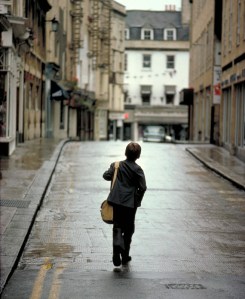 My plan was to move back East, and pursue my dream of becoming a photojournalist. That was where my heart was – “telling the story” through my images and I wanted to share those images through the pages of magazines. But even back then photo essays and the magazines that printed them were threatened by a bad economy and changing times. Look had just folded and Life was seeing its demise – the first time around.
 – us Americans, our culture at that time in our history. He was an observer of “all” people not just the beautiful ones captured on the pages of Harper’s Bazaar, and he captured those observations for generations to come.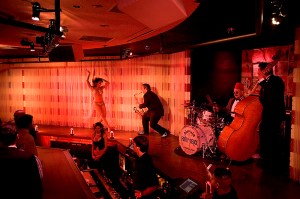
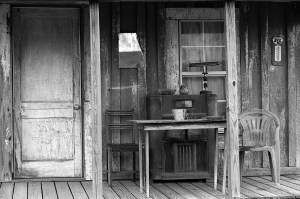
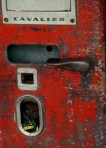 Even though this plantation is worlds away from my cultural norm – I get a feeling of comfort mixed with a bit of melancholy for my own past when I’m there.
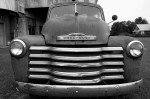 Will it add or will it distract? What piece of music should I use and what will that add to the story? Will the music overpower the piece – because many times it can. And too many times people try to add music to mediocre images to make them more exciting.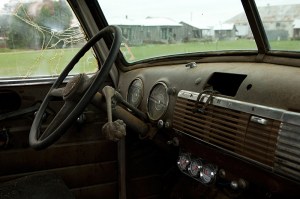


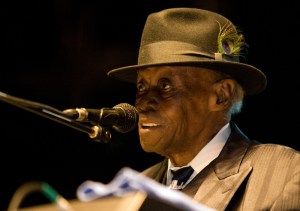 Pinetop Perkins is a legendary boogie woogie piano player in the blues world. He’s 96 years old and still going strong. He is living proof of a man who is “living his passion. I’ve become friends with Pinetop’s manager over the years and yesterday we got together over lunch to catch up on what was going on in our lives. I hadn’t been to the Delta for a few years and she was giving me the latest news on some of the musicians that I had interviewed for my film. Four have since died – Little Milton, Robert Lockwood Jr., Ike Turner and most recently Sam Carr.
 Journeys of a Hybrid