Why Did You Want to Become a Photographer?

That was one of the questions posed to me during an interview this past weekend. A young woman had asked to interview me for a college paper she was writing. The call and the questions started out somewhat clinical, most likely another task or paper that she needed to check off her list. She proceeded through the usual list of questions: “Did you go to photography school?” “What type of photography are you interested in?” So on and so forth.
I could hear her typing my answers and I paused to let her catch up. But then she asked a question that really struck me on many levels. “Did you get into photography because it was cheaper?” I asked her what she meant by that – did she mean the tools of the trade were cheaper? When she responded “yes”, I told her that was somewhat of a misnomer and that the first cameras I bought (mechanical ones) I had used for 10 years. I added that now, because of the exponential impact of technology on my profession, my cameras and the software I need on the post end, have to be upgraded at least every two or three years, and that was only part of the investment required in the “tools of the trade.”

As she typed my response, I felt myself getting a bit anxious and I started speaking rapidly. I told her that even if that were true – meaning that I got into the photographic profession because it was cheaper – that would have been the absolute worst reason for me or anyone else, to choose photography as a profession. I went on to say that you need to be passionate about some aspect of photography that makes you want to do it more than anything, if you want to have a chance of sustaining yourself financially in this profession. Pursue photography because it brings you joy and that if you are getting into it because the entry level costs were “cheaper” you’ll simply be competing with thousands or tens of thousands of button pushers.

I went on to tell her that I became a photographer as a means to an end. I had been studying architecture in college and after two years left school to travel. I traveled the world for a year and came back knowing that I wanted to pursue a lifestyle that would incorporate travel but more importantly fill my endless curiosity of people and cultures and exploration. I wanted to become a storyteller, and became a photographer as a means to that end.

As the interview progressed I noticed the typing started to diminish as I told her that I have never separated my business from my pleasure and that they have always been tied together throughout my life. Simply put – my business is my pleasure. I talked about my frustrations starting out as one of a handful of women in a man’s world and for the most part a man’s profession – at least in the early days. I talked about the endless stream of rejections and the “wins” that seemed to pop into my life when I needed them most, rescuing me in the knick of time, just when I was thinking of quitting and moving into another career. I told her that unless she really wanted to do photography, she wouldn’t survive in this profession. I talked about my mentors when I was her age and how grateful I am that I had those people in my life. I relayed a couple of anecdotes about things my mentors had said to me and how those words had been pivotal moments in my life and that when things got tough, I drew upon those words of wisdom to get me through the day.

Then there was a very loud audible sigh, followed by a long period of silence and my mind raced through the various things that I had said to her. Was I too harsh? Did I paint too bleak of picture? Or worse yet – did I make it sound too easy and that all she had to do was “just do it”. I felt this overwhelming sense of responsibility that maybe I said something that was going to dictate the rest of her life and I kind of panicked in that moment of silence. And then she said “thank you so much for talking to me today, I started out just wanting to write my paper, and I’m going to have a great paper, but you have no idea how much talking to you has helped me.” She went on to tell me that she had been struggling with a decision that she was trying to make between going to law school and going to film school. I told her that she needed to make that decision all by herself and that it wasn’t a decision that anyone else could make for her – not I – not her parents – not anyone else. I told her to dig down deep into herself for the answer, beyond the influence of others, the dogma of the day and all the noise. And most importantly to remember that it was her life and that she got to choose how to live it and that she had every right to change her mind along the way.

Quite honestly, it has been one of those “onion” months for me, with layers of setbacks and second-guessing myself. I got off the phone feeling good about paying forward what I have learned along my way and in that moment, I realized that this might be my “purpose” at this point in my life. The day had turned into one of those sweet “strawberry days”. She didn’t know it, but she had helped me as much as she said I had helped her. It’s those conversations and those little moments that keep me going, and come to my rescue, just in the knick of time.

I would love to hear from you all – why did you want to become a photographer?  Something you say or write just may help someone and paying it forward is the best feeling in the world.

Add to FacebookAdd to DiggAdd to Del.icio.usAdd to StumbleuponAdd to RedditAdd to BlinklistAdd to TwitterAdd to TechnoratiAdd to Yahoo BuzzAdd to Newsvine

Closing Thoughts and Best of Best

It’s been a very full year for me. I mean that in every sense of the word full – full of new experiences, full of hope, full of achievements – but also full of my share of rejections and disappointments. I’ve shared a lot of these experiences through this blog.

There have been times I haven’t written in a while because I didn’t feel like I’ve had anything worthwhile to say. And there have been times when I did write but I probably shouldn’t have because it wasn’t worth reading. I always told myself that when I didn’t feel like writing in my blog, that I just wouldn’t do it. So if there are long periods of time when I haven’t posted a new entry – it’s because for whatever reason, the desire may not be there. I have always appreciated the comments and feedback.

Here are the top 5 posts as far as number of hits:

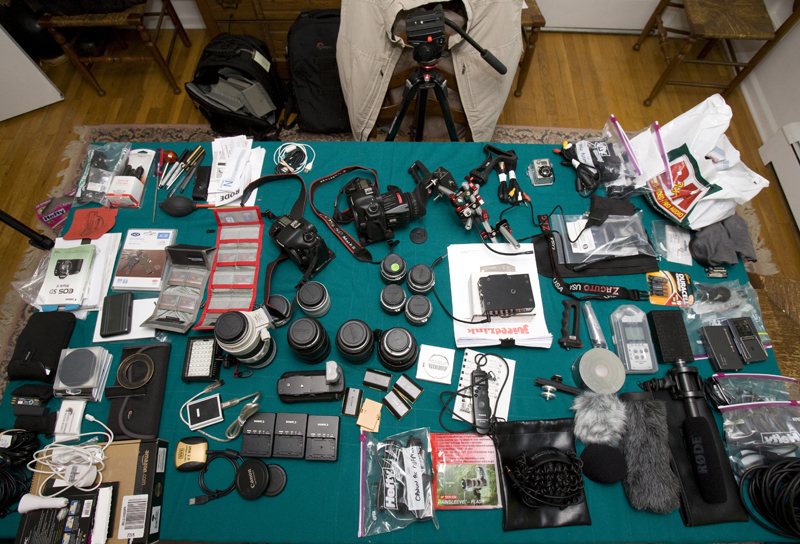
My DSLR Kit for a Three-Month Road Trip

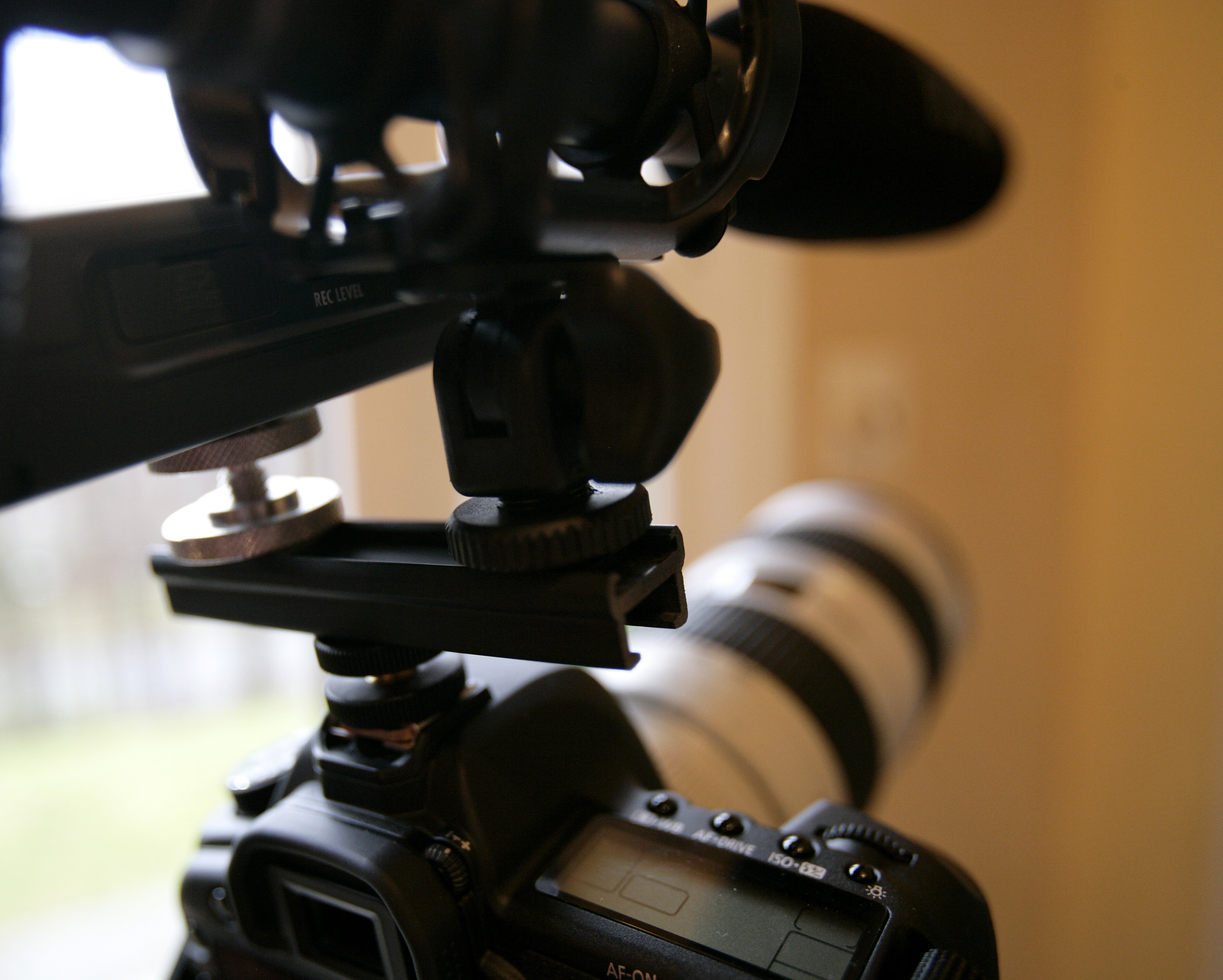
Gearing Up With HD DSLR’s


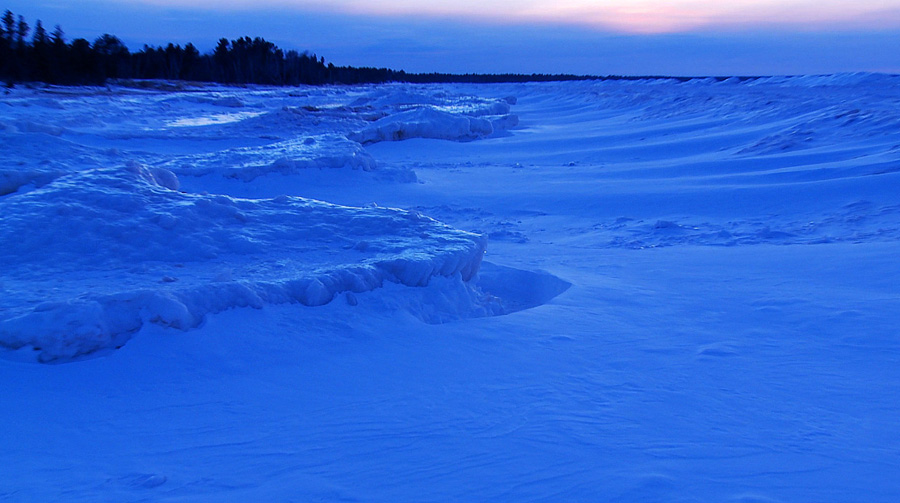
Standing on a 10-Foot Frozen Wave

Putting Together a DSLR Video Kit – and Why

Cultural Context and Photography

As you can see, the blogs about DSLR (for video) gear is where the interest was.  But I’d have to say that out of those 5 posts, “Standing on a 10 Foot Frozen Wave” was my favorite.  For me, it’s all about the story. And as Orson Welles once said “If you want a happy ending, it depends on where you stop the story”.

Happy New Year everyone.

Add to FacebookAdd to DiggAdd to Del.icio.usAdd to StumbleuponAdd to RedditAdd to BlinklistAdd to TwitterAdd to TechnoratiAdd to Yahoo BuzzAdd to Newsvine

The Problem With (Most) Video/Motion Workshops

This has been something that has been weighing on my mind for months now – ever since the seemingly “overnight sensation” of people giving video workshops as well as the growing number of still photographers that are feeling the need to take these workshops.

The biggest problem that I see with all the video/motion workshops that are out there is that they oversimplify video production and take the approach that the single independent still photographer can learn and do it all – produce, operate the camera, capture good audio and manage the post-production and edit.  I suppose to be fair – while it may be true that the independent still shooter can learn all facets of video production, that is not the best approach as far as setting up a viable business model for a video production company.

Video is a collaborative medium.  While I may be able take just about any video production from soup to nuts single handedly – I know that the production would suffer if I did.  I learned a long time ago to build a team of good sound people, editors and even camera operators that I can draw on to hire on a need be basis.  They make the production and me look good and that’s what keeps my clients coming back.  It also allows my business to grow because I can take on more projects. If I’m not entrenched in all aspects of the production. It frees me up to start production on another project while still in post-production of a previous project.  If you are a one-man band, you not only don’t have this option but you actually make yourself look small in the process.

Video and motion have many facets to them.  I advocate that the best business models are when one positions themselves at the top of the content creation ladder by overseeing the production of the whole and hiring the appropriate crew that will facilitate the process.  By recognizing the differences between this business model and the “solo” model that most independent photographers work under, you’ll have a much better shot of maintaining ownership of your work and creative vision as well as having the potential to grow your business beyond your own singular capabilities.

The other problem with workshops that over simplify the process of video production by promising that you will be up and running after a one day workshop is that they are centered around learning the gear and the software which changes by the month.  If you learn just the gear du jour and not focus on the business of video production you will be in competition with other independent dabblers and that’s a quick way to the poor house in terms of sustainability.

A week doesn’t go by when I don’t get at least a dozen calls or emails from still photographers who feel they need to get into video and are overwhelmed by the learning curve.  I tell them that the best thing they can do is NOT to try and learn all these skills themselves and that in fact that will only delay their entry into the video production, business if that is what they are after.  A better way is to keep your focus on your vision, apply that to a sustainable business model that will incorporate video and collaborate with others who will make you look good and help you grow your business.

Add to FacebookAdd to DiggAdd to Del.icio.usAdd to StumbleuponAdd to RedditAdd to BlinklistAdd to TwitterAdd to TechnoratiAdd to Yahoo BuzzAdd to Newsvine

Five Top Tips for Emerging Photographers

I talk to a lot of young aspiring photographers these days and invariably I am asked, “What advice would you give someone who is just starting their career in photography? – Is there a future? – Can I make a living?”

I don’t have a crystal ball but I do have 35 years of experience behind me but yet the enthusiasm and outlook of a 25 year old.  I remind myself of what I learned from my mentors when I was just starting out. One mentor, who shaped my career, was art director Adrian Taylor of Travel & Leisure Magazine. Adrian taught me a lot – about magazines, about the story, about style and taste and most importantly he gave me the confidence to believe in myself.  Adrian gave two young, naïve photographers, my partner and myself a chance and in return – we always gave it our all every time we set out to shoot a story.

Add to FacebookAdd to DiggAdd to Del.icio.usAdd to StumbleuponAdd to RedditAdd to BlinklistAdd to TwitterAdd to TechnoratiAdd to Yahoo BuzzAdd to Newsvine

With that said, I would not be where I am today if it had not been for mentors like Adrian Taylor and my greatest joy at this point in my life is to pay that forward to photographers just starting their careers.

  • Learn video – Video is no longer a “specialty niche” or in fact a separate genre at all.  In the very near future – which is already upon us – a photographer will need to know how to shoot both stills and motion – or partner with someone who does.
  • Stay true to what your inner voice is telling you.  For example, if your passion is to be a photojournalist, don’t listen to people who are telling you that photojournalism is dead and that newspapers are a thing of the past.  While “printed” newspapers may be dying out – journalism and photojournalism is not.  Don’t let others’ dogma determine what your path should be.
  • Collaborate with your peers.  When I was first starting out, photographers kept their clients, their techniques and their ideas to themselves.  But I have found that whenever I have collaborated with others – we all push the bar to the next level – each bringing their own strong suits to the project.  As a subject of my film Opening Our Eyes told me “We’ve got to shine each other up.”
  • You don’t need the validation of others to proceed with your idea and make it into a tangible plan and product.  As far as publishing and/or distribution is concerned – the gates to the kingdom are open and the kingdom is the entire world.  We are living in a time of empowerment for the individual and for a content creator that is profound.  If you are willing to do the work – the rewards are bountiful.
  • Act on the ideas that don’t go away.  It’s easy to let resistance sabotage you.  Resistance comes from many places – your loved ones, friends, your peers – but mostly yourself.  Stop talking yourself out of ideas and start acting on the ones that just won’t quit you.

I have made my work my pleasure in my life.  I have always found it difficult to separate the two.  When you feel that – you’ll know you are on the right path.

The Money Game

I’ve learned a lot about the “entertainment” industry in the process of creating our documentary Opening Our Eyes. But I was a bit surprised to learn how one show derives its content. I won’t mention specifics, because I don’t believe that this particular way of doing business is unique to this one show.

A couple of days ago, I received an email from one of the subjects in our film asking for my counsel about a high profile program that is syndicated on various cable channels. The show essentially does short segments on organizations and/or companies that have stories of educational value.

I looked through the electronic info kit that they had sent and it sounded great, because they guaranteed placement for the 5-6 minute piece within the program, which would run on a couple of large cable networks. They also guaranteed a 1- minute spot on CNN and Fox News. Plus the production company would deliver a file ready for web so that an organization could upload it to their site and/or deliver DVD’s to potential funders or clients.

I continued to read the attached PDF’s which listed the production requirements and workflow that would take place if “they” were selected to be profiled. But what stood out and surprised me was the line that stated that a payment of almost $30,000 would be required, if they were chosen to participate. Quite honestly, I was a bit shocked. Here was a production company that was creating a syndicated program and expecting the subjects to finance it.

I’m almost certain that this company also makes a hefty sum from the cable networks who in turn get money from their advertisers. That doesn’t surprise me a bit. But I didn’t know that it had become part of the game to make revenue off the subjects of the stories!

Perhaps that might not sound all that bad because it’s just business in a free economy, but quite honestly it has really changed my thinking about networks that run stories about people, organizations or institutions that have educational value. Now when I watch a show like this, I will question the credibility of the causes and organizations that are being profiled, because I know that this “door to distribution” is only open for those who can pay. And that doesn’t necessarily mean that the stories they run are about the most deserving subjects or even the most compelling stories. It simply means that the people behind these stories had the funds to “pay to play”.

I think back on all the extraordinary people that we met last summer while making our documentary. Most of them would be hard put to find this kind of money and if they did they would probably put it right back into their causes and the people they are trying to help – not a production company that is making money off both ends. I went in the “red” doing this documentary with the hopes that it will cause a shift in the way we think and that it will move people to action to make a difference in the world. I figured that’s the least I could do – use my skills as a storyteller to create a film that would raise awareness and help all our subjects and their programs.
Would I like to make money on this film? I’d be happy if I broke even. I’d be even happier if this film was seen by hundreds of thousands of people. But I wouldn’t dream of charging my subjects money.

Ronni Kahn of Oz Harvest told me “Just go out and do something – not for the money not for the recognition but for the sake of doing”. I suppose that’s exactly what Erin and I did. And that in itself has been the biggest reward of all.

Add to FacebookAdd to DiggAdd to Del.icio.usAdd to StumbleuponAdd to RedditAdd to BlinklistAdd to TwitterAdd to TechnoratiAdd to Yahoo BuzzAdd to Newsvine

What to do When in a Slump

There are all types of slumps – creative, financial, relationship and personal. I’m sure there are others, but those are what come to mind – I’ve experienced all of them. I think that comes with living the kind of life I lead. There are times when it seems like I’m on a never ending roller coaster ride with lots of ups and lots of downs. The one thing I try to do when I’m in whatever kind of slump I’m experiencing,  is to focus on the areas that seem to be working in my life.  I’ve learned to take the bitter with the sweet.

Here’s some other remedies I have found that help get me out of a slump:

  • GET OUT – I mean that literally as well as figuratively. I break the pattern of what I am doing that doesn’t seem to be working and “get out” of that place. I also literally – get out – I change my environs – I get together with friends.
  • TRY SOMETHING NEW – I do something that I may have been thinking about, but I usually talk myself out of with every rational reason I shouldn’t do it. So, I follow my irrational instincts.
  • WALK AWAY – This is especially true when you are dealing with something technical and you just don’t “get it”. There have been days when I have struggled with something that wasn’t working – like when editing in Final Cut Pro – and I need to give myself some time away from the problem. But this only works if you aren’t up against a tight deadline. I try not to force a learning curve into situations with tight deadlines.
  •  FOCUS ON WHAT IS GOING RIGHT – There is always something to be grateful for – focus on that.
  • BE STILL – I think this is perhaps the most important remedy that I have learned to embrace and that is – to give something time and not  force it. If something is meant to happen then it will – and in its own time.

Every one of these “remedies” is pretty much centered around the same thing,  and that is to recognize that there will always be slumps in one way or another – but they will make those sweet times that much sweeter.

Add to FacebookAdd to DiggAdd to Del.icio.usAdd to StumbleuponAdd to RedditAdd to BlinklistAdd to TwitterAdd to TechnoratiAdd to Yahoo BuzzAdd to Newsvine

Being Yourself

Yesterday, I gave a talk and showed a bit of my film, Opening Our Eyes,

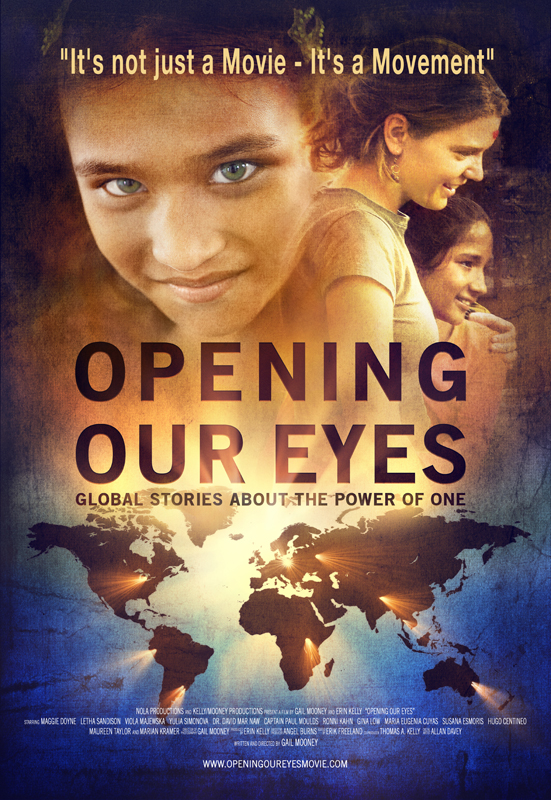
Movie poster for Opening Our Eyes

at the PACA conference in New York City.  I had been asked by ASPP to speak about the making of the film and my plans for distribution.  To tell you the truth, even though I’m always thrilled to show and/or talk about the film, I was a bit nervous with this crowd.  PACA stands for the Picture Archive Council of America and its member include some of the biggest stock photo agencies in the world, including Getty, Corbis, Masterfile and Alamy. I was nervous because part of my message was that I no longer needed the validation or others to get my stories to market.

I thought my message would be somewhat threatening, because I was telling the audience that content creators no longer needed the traditional gatekeepers of the past, to get their stories “out there.”  That because of technology, it was possible for the individual to have a global reach and if one is willing to do the work – the prize is all theirs – meaning the monetary rewards.

I had a tough time slot to speak – right after lunch  –  I knew that I would be dimming the lights for the film and that is never a good thing to do in that time slot.  But, Tom Kennedy had given his very inspirational talk about new media and new opportunities in the  marketplace.  I had heard Tom’s talk  as part of ASMP’s SB 3 series this past year – and I knew that my presentation was a great follow up to his – and in fact it was almost like a case study example of what Tom was talking about.

My presentation went amazingly well and as I looked out into the dimly lit audience as the film was playing – I couldn’t see any closed eyes.  I felt that I made a connection, and that perhaps in some small way, I had made a difference.  Maybe, I just got people thinking about what they could do to make a difference in their own lives.  And maybe I had influence beyond that.  But, I know that I stayed true to myself.  My intent was not to come off as threatening  – but I did want to make people feel a tiny bit uncomfortable.  It’s when we get uncomfortable that we push ourselves to a better place.

My message was simple.  Someone doesn’t need to lose – in order for someone else to win.

Add to FacebookAdd to DiggAdd to Del.icio.usAdd to StumbleuponAdd to RedditAdd to BlinklistAdd to TwitterAdd to TechnoratiAdd to Yahoo BuzzAdd to Newsvine

New Opportunities for Photography

For this post, I’m going to use a very broad definition for “photography”.  I will define photography as any image still or motion shot by any camera – still camera, video camera, hybrid or even and iPhone.

The business of photography has changed with technology. To start with it demands more than just “still captures” in terms of content. These days, our clients are asking us to create stills and motion content and sometimes even 3D.  On top of that technology has made it possible for almost anyone to take a reasonably good picture or video.

So where does that leave us as far as new opportunities in the business of photography? While some look in their rear view mirror and lament the passing of the good old days, I for one have my eye on the possibilities that are open to anyone willing to do the work.

My top 5 pick of opportunities out there:

  • Once Magazine – An online photo magazine made for the iPad. Photographs and video look great on the iPad and Once, magazine shares subscription revenue 50/50 with each issue’s contributors. You no longer need an assignment to shoot those long run stories you love and monetize them.
  • Crowdfunding – With Kickstarter, RocketHub
  • DistributionFilm DIYDistribber
  • Funding and marketing  – Sokap
  • PR and Marketing ToolsTopspin Media
  • Portal for e-commerce (also integrated websites) – Photoshelter

That’s a start.  It’s never before been more possible than it is now to create, promote, market and monetize your “photography.”  Be smart.  Be authentic. Be courteous. Have a plan and be prepared to do the work.  Anything is possible. Validation for your project is no longer necessary.

If you appreciate what I have shared – here’s one last link, a shameless plug to our funding campaign on IndieGoGo for our film, Opening Our Eyes.  If you can, please contribute. If not, please pass along the link.

Marian Kramer, one of our subjects in the film says:
 “We all just have to shine each other up.”

Add to FacebookAdd to DiggAdd to Del.icio.usAdd to StumbleuponAdd to RedditAdd to BlinklistAdd to TwitterAdd to TechnoratiAdd to Yahoo BuzzAdd to Newsvine

The NON Convergence of Still Photography and Video

Many people, myself included have written about the convergence of stills and video. In fact ever since Vincent LaFloret paved the way, shooting video in a cinematic way with the Canon Eos 5D Mark II, it seems like every still  photographer wants to shoot video with a DSLR . At the same time, high end “video cameras” – not still cameras that also shoot video – but a high end camera like the RED is capable of capturing stunning stills from frame grabs and they aren’t just good enough – they’re great.

I suppose in this sense one could argue that there is not only a convergence of our tools – meaning a camera that is capable of shooting high quality video and still images – but that it also may mean – the end of still photography. I don’t have a crystal ball but if one defines a still image as a “moment in time” then still photography will never go away. If you have a camera that shoots hi res video and can pick and choose the exact frame that fits your still image needs – then we need to realize that this is a convergence of our “tools”  not the the end of creating still imagery.

I love to point out the differences of still photography and video because for me, and many others who shoot both still photographs and video, we think differently when shooting these mediums.

  • A still image is a moment in time.
  • Video is time in motion
  • A still image is one that is meant to linger on – where one can take pause
  • Motion imagery is made up of  a variety of shots and sequences
  • Video provides more information – there’s sound and  movement
  • Still images leave more for viewer interpretation
  • Still images deliver a message visually
  • Video delivers a message utilizing sight and sound

Everyone of these differences requires us to put our minds in a different place. When shooting video, I need to think about what shot will come before and what shot will come after the shot I’m about to shoot. I have to think that way or I won’t have the goods to cut with in the editing room. The message or story gets crafted further in post production with music and interviews and each element plays its part in the feel and arc of the story.

When I’m shooting still images, I must tell the story in that one frame and timing is everything – it’s the “decisive moment”. So, one must ask is it the same – is it even fair – to grab that “moment in time” from a video clip where the camera operator didn’t make a conscious decision when shooting that decisive moment ?

The point is with everyone talking about “convergence” and taking that to mean the demise of still photography – I have to wonder. Is it the end of still photography? Personally, I don’t think so. I think that it merely means a convergence of the tools – not what we create with those tools.

Add to FacebookAdd to DiggAdd to Del.icio.usAdd to StumbleuponAdd to RedditAdd to BlinklistAdd to TwitterAdd to TechnoratiAdd to Yahoo BuzzAdd to Newsvine

Pick Up the Phone

Maybe because today is Father’s Day, I’m thinking about ties and connections and how much has been lost over the years in the way we have chosen to communicate with one another.

Pick up the phone and call

It’s an odd mix as far as behavior goes, in terms of how we communicate (or don’t), but regardless of whether we are communicating for business or personal – we seem to have lost the “personal” touch.

The memories I have of my Dad and others who are no longer here, are our conversations and just enjoying the dialog between the two of us.  These days, it seems as if people avoid one another – even when they are in the same room together.  There have been a few occasions over the last couple of months where I have been with a small group of friends and there has always been someone in the bunch – who is there in body – but not really –  because they are glued to their “device” and communicating with whomever isn’t there.

Call me “old” but I just don’t get that. I’ll always opt to have a conversation with someone face to face and my second choice is always  to have a conversation with him or her over the phone.  Why?  Because a phone conversation has interaction – in real time.  Emails can be exhausting with the back and forth banter and texting is even worse because of those little keys.  And of course when emails are ignored – there is no interaction – so what’s the point?

With all the options of how to communicate with everyone these days,  including all the social media forums, a personal connection is still the best way as far as I’m concerned.  Sure, you can’t take the time to talk to everyone on any given day, and I don’t.  But there are times, that I do want to connect with someone on an individual level – without blasting it out to the world on Facebook or Twitter and without it being a one sided conversation. And when it comes to business, nothing replaces the one on one face to face or a phone call.  That’s really the only way to emote your message and relay it in the manner it is meant to come across.

Today is Father’s Day.  If you have a Dad who is still in your life – pick up the phone and call him because I know it will make his day.  If my Dad were still alive, I would be making that call.  My only regrets are the times that I put those calls off.  But what I don’t remember is why I did it – the reasons couldn’t have been that important – but stupidly I rationalized they were at the time.

Add to FacebookAdd to DiggAdd to Del.icio.usAdd to StumbleuponAdd to RedditAdd to BlinklistAdd to TwitterAdd to TechnoratiAdd to Yahoo BuzzAdd to Newsvine