Validation No Longer Necessary

There seems to be a prevailing attitude of doom and gloom. We have an economy that can’t seem to turn itself around and we’re bombarded by change that technology continues to thrust upon us.  We’re scared to death of the unknown and nobody seems to know what to do next and how to make any money doing it.
Yet, I’ve never been more hopeful in my life. Why?  Because I no longer need someone else to validate my ideas – and that is a powerful notion.  Those of us in the communication business seem to be particularly fearful. Some believe that the “news” business is dying because print publications – newspapers and magazines are folding every week.  But the “news” business is not dying – it’s just being delivered  in another way – electronically and globally.  There are no longer just a few gatekeepers with a lock on the playing field.

Human beings are social animals and we will always have the need to communicate with each other.  These days we can communicate with one another globally.  An idea or creation can be shared around the world in a matter of minutes.  Think of the power in that and think of how we can use that power and the opportunities it presents.  I could digress into a discussion on the ethics of this thought but I’d like to focus more on the reach and influence that each one of us has in creating awareness.

Many of us get enamored with the latest devices that enable us to deliver and receive information with speed and ease. As technology’s exponential growth continues to change our lives in every way imaginable, we will constantly be incorporating and upgrading new gadgets and devices as part of our lives.  We need to be mindful that these “toys” are merely enablers and that each one of us can use these tools to create and distribute our words, images, designs and ideas across the planet.

I think that we as creative’s or journalists underestimate ourselves sometimes.  Perhaps because we chose professions that aren’t lucrative – at least in terms of money.  However, what one is paid doesn’t necessarily correlate with one’s worth. We live in a time now where we can use our creative skills to really make a difference and to tell the stories that we feel need to be told. Mass communication has been democratized. We no longer need the traditional gatekeepers to validate our ideas.

I never would have dreamed that I would be able to circumvent the globe, create a documentary with only one other person in my crew  – my daughter and then distribute it internationally. I never imagined that I would have the power to create awareness on a global level like I did when I uploaded my trailer to Vimeo.  In a little more than a week’s time people in over 72 countries had played that video. Now in less than a month’s time, that trailer has been played in almost half the countries on the planet.  Staggering thought.

This was not a commissioned project by a network or a motion picture studio. If I had waited for that – it never would have happened. I assigned myself.  I was able to fund it by using my airline points, hotel rewards and doing trades with manufacturers for equipment.  I also successfully raised money via Kickstarter a crowd funding site  that made it possible for me to hire a professional editor. My daughter and I have been building an audience for our film since we started blogging about our journey. Our readers got more and more engaged as they followed us on our 99-day adventure around the world. They spread the word through Facebook and Twitter and via their own blogs and pretty soon word of our project spread virally. That was precisely our goal.  To use our tools and skills to create a film about the change makers of our world so that others would be inspired and motivated as to what they can do.

I often think about how things in my life and in history would have been different if we had the Internet when I was growing up.  For starters it would have had a huge effect on the Civil Rights Movement of the 60’s and the Vietnam War.  But everything happens in its own time and when it is meant to happen.  Change can be scary or it can be embraced and sometimes both at the same time.

Never stop dreaming. Never stop learning. Always listen to that inner voice.  Then use the means and the tools of the day to do the dance you are meant to do.

Add to FacebookAdd to DiggAdd to Del.icio.usAdd to StumbleuponAdd to RedditAdd to BlinklistAdd to TwitterAdd to TechnoratiAdd to Yahoo BuzzAdd to Newsvine

Commitment

I was stunned yet not surprised yesterday when I heard the tragic news that Tim Hetherington had been killed in Libya.  I’m grateful that I had seen Hetherington speak and present his work at Photo Plus in 2009. I remember being awed by the intimacy of his photographs and motion.  The viewer felt that they were right there in the action because Hetherington had been – and relayed that story to us.

We know about Hetherington and his work mostly because his documentary Restrepo had been nominated for an Oscar last year.  But how many other men and women who document the wars and the natural disasters, putting themselves in harms way on a daily basis, do we ever even hear about? That’s because it is not about them, it’s about what they are photographing or filming or writing about.  It’s about making others aware.

I once thought that I wanted to be a hard news photojournalist because there is a big part of me that loves to be where the action is.  But I also know that living that kind of life takes its toll especially on ones personal life.  I didn’t know if I could achieve the kind of balance in my life that I felt was important, pursuing that type of photography.  So I went the way of shooting more editorial feature pieces with a focus on people. I also thought that I might be the type of person who would become overly emotionally invested when on site and perhaps not able to fulfill my journalistic responsibilities.

I will always have the utmost respect and admiration for all the working journalists, photojournalists and video journalists out there who give us these incredibly intimate stories, risking their own safety over and over again. They do it for precious little financial reward.  They do it because good journalism is necessary for a healthy society. I’m forever grateful.

Snapshots With Words

Many of you have probably heard me say “still images are moments in time” and “video is time in motion”.  I think and I shoot differently in each of these mediums.

It is kind of like the difference between poetry (or the lyrics of a song) and prose.  In a poem, just as with the lyrics of a song, each word must “say” a whole lot just like a still photograph must convey everything in that one moment in time.  When writing prose you have all those other words to connect your thoughts. To be honest, I never took any writing courses in college and I did not find myself reading books of poetry in my off time.  But I did listen to a lot of music back then – still do – and there’s not a lot of difference between the lyrics of a well-crafted song and those in a poem.

When I was traveling last summer, I found myself mentally capturing images in my head as we went from destination to destination.  I started to type out these random thoughts on my blackberry and because of the nature of that device and the tiny keys, I typed out my thoughts in abbreviated fashion. My intent was never to share these thoughts with anyone, let alone pretend that I could write poetry, but I did share some of them, reluctantly and with trepidation, “testing the waters” so to speak.  I felt like I was standing on the edge of a dock and dipping my toe into the water while a friend egged me on and encouraged me to jump in.

I’ve continued writing my snapshots with words but I’ve become a bit more self-conscious these days with sharing these thoughts.  Perhaps I’ve become more guarded or maybe just too self-conscious to share.  I suppose that’s ok because what is most important is that I don’t let my own inhibitors and doubts stop me from writing.  When I first started writing down these words or poems or whatever label you want to put on them, perhaps I needed to share them with someone else. I needed to test the waters and when I did I got the necessary encouragement to jump in.

These days I try not to define myself too rigidly as to who or what I am by definitions and labels like photographer, filmmaker, writer or poet.  Ultimately, I use whatever tool works best to express the thoughts and stories that run through my mind. I continue to stick my toe into unfamiliar water and every now and then I get brave enough to jump in thanks to a little encouragement from my friends. I think we all need that in our lives – someone who we know we can bounce ideas off of without the fear of ridicule. As one of the subjects in my documentary beautifully stated “we’ve got to shine each other up”.

FaceTweet it!

NAB Show 2011 Afterthoughts

Whew!  I’m fatigued in every way imaginable – in a good way though as I always am after attending the National Association of Broadcaster’s annual show in Las Vegas.  It’s overwhelming and over stimulating and after I get home and decompress for a day I’ll make some sense out of what I learned and how to apply it in my hybrid world.

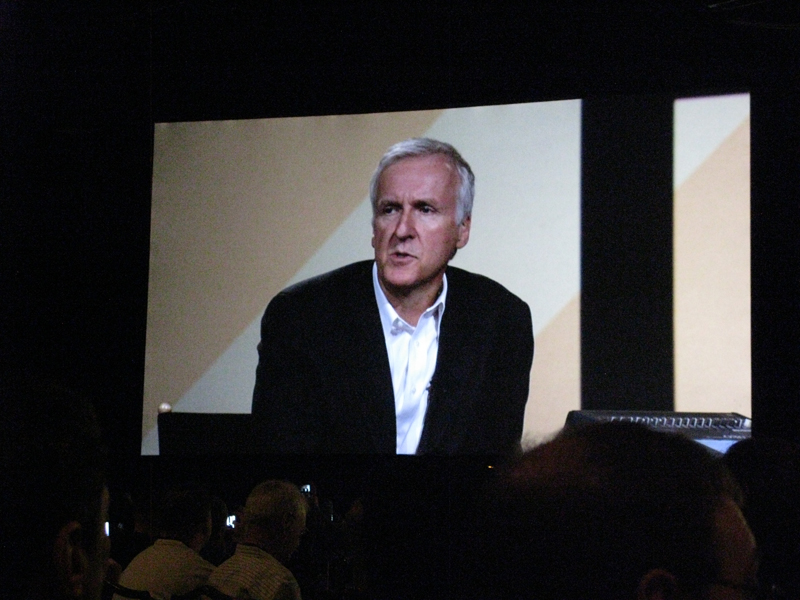
What springs to the forefront of my mind as I wait for my flight, which is delayed, is that convergence and/or “integration” continues at a rapid pace.  3D, which seemed to be the big topic last year is still present but not commanding all of the attention.  This year the conversation seemed to be centered on the integration of TV and Broadband.  But I couldn’t help but wonder as I went from James Cameron’s keynote where he talked about his continued thrust into 3D, to a session on TV and Broadband convergence – where does 3D fit into the Broadband world?

Many attendees infatuated with the HDSLR solution wondered why Canon didn’t roll out the next “hybrid”.  I’d like to think that Canon is working on a video camera that will utilize a “big chip” than working on  a still camera that has less work arounds in an attempt to make them more video friendly.

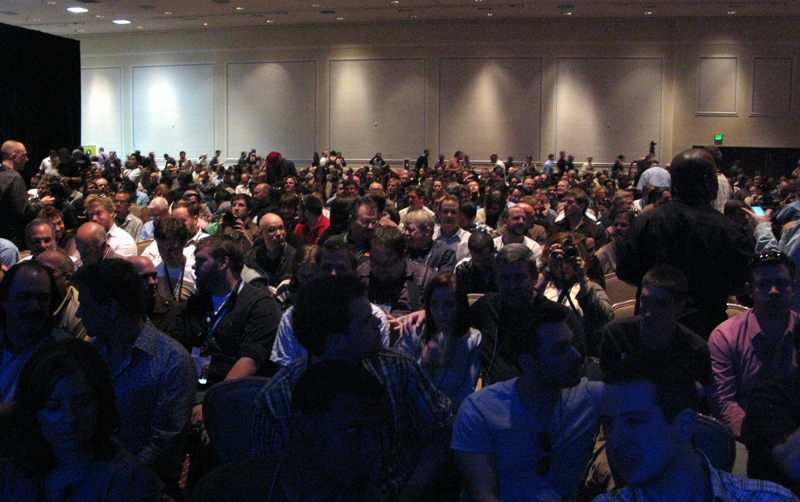
Adobe announced CS5.5 and the next day Apple made their worldwide premier of Final Cut Pro X at the Final Cut Pro Users Group Supermeet.  The crowd went wild as each new feature was demo’d – no transcoding, auto rendering in the background while still working, no more clip collisions and so forth.  At the end of the demo everyone’s jaw dropped when they announced the price at $299.  What Apple didn’t tell us – is if and how it will integrate with the other apps in Final Cut Studio like Soundtrack Pro, Motion, Compressor and Color.

Another very cool product was the Ninja by Atomos an Australian outfit.  The Ninja is a monitor  – but not just a monitor because it takes your media out as 8/10 bit uncompressed HDMI and stores it on insertable 500 G hard drives.  Unbelievable and at a price of less than $1000.  That means that compressed media gets output at a quality 8 – 10 times better than recording it to cards.  Sorry, DSLR users but it doesn’t work with Canon’s DSLR’s  because for some reason there is no way to record the data without the display.  That’s a question for Canon as to why it can’t over ride that and output and record without the display recorded on the data.

As always my favorite part of NAB is sitting in on the Super Sessions with big time directors, editors, CEO’s of broadcast networks and manufacturers.  That’s where you truly get to engage the movers and shakers in the industry and learn and ask questions.  One of my favorite sessions was with filmmaker Kevin Smith.  He is the kind of guy that constantly pushes the envelope and he made a comment that stuck with me.  He said “Hang with the people who ask why not – not the people who ask why”.  It’s a lot easier to question why and in the process never get anywhere but to have to courage to say “why not” – well that’s when things get created and invented.

So, as I head home thoroughly exhausted in a good way; I’ll hang onto that thought and seek out others who say “why not?”

Add to FacebookAdd to DiggAdd to Del.icio.usAdd to StumbleuponAdd to RedditAdd to BlinklistAdd to TwitterAdd to TechnoratiAdd to Yahoo BuzzAdd to Newsvine

Embrace Disruption

Every now and then disruption needs to take place and does.  Technology is causing disruption in all our lives but it need not be looked at as a negative thing.  We can embrace it and find opportunities or we can shut ourselves off and become obsolete.

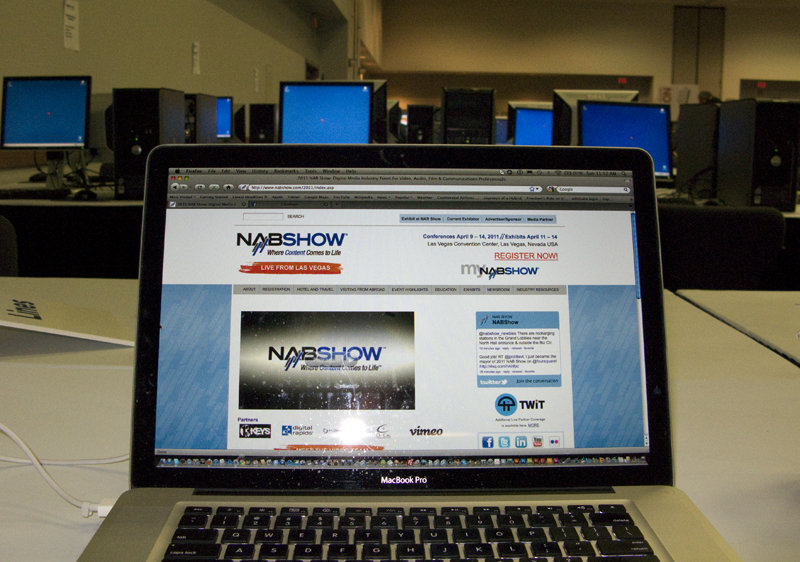
It’s Day 3 of the NAB Show Every April the National Association of Broadcasters have one of the largest conferences in the world but these days this show is not just attended by broadcasters.  As TV converges with the Internet the attendees have become more and more diverse.

On a very small scale there is the DSLR contingent along with all the vendors that cater to this group with their third party add ons – a big business these days for sure. At Canon’s display, Hollywood DP’s and cinematographers like Gale Tattersall of House and Russell Carptenter of Titantic (to name just one of his films) tout the merits of the Canon 5d MarkII and make the point how these hybrid cameras have created a new aesthetic.  They are also quick to point out that these “affordable” cameras are not chosen because of budget but rather because they are small and discreet and create a beautiful image in low light.  One digital “rebel” filmmaker remarked how he shot a scene for his film on an airplane with an actor and no one even took notice because its such a low profile camera.

But back to the word disruption.  Convergence works both ways. As much as the DSLR has rocked the still photographic world and created a huge hunger amongst still photographers who want to learn how to shoot motion and capture good sound, it has also rocked the world of motion shooters who are providing stills for their clients and learning the language of photography.

TV and Internet are converging.  There is a whole generation that has no need for a cable hook up.  They watch what they want – when they want – online.  Just like they never get a landline – many never get hooked up to cable.  The small affiliate broadcast stations are feeling just as threatened these days as magazine photographers are because of the demise of print publications.  Their worlds have changed because the patterns of the end user have changed.

Director James Cameron (Titanic, Avatar) just formed a partnership with a 3D company.  As TV’s are manufactured with 3D capability and the tech hurdles are overcome, he feels that 3D will become mainstream. But he goes on to say that the big problem is content because the only content created now is coming from the motion picture industry.

And Apple made their worldwide announcement last night with Final Cut Pro X.  I was in the room and all I can tell you is that it is REVOLUTIONARY.  Watch out Adobe.

But at the end of the day – of every NAB day – as I sort through all the information and announcements – I ground myself and think about what I will choose to embrace.  How can I use technology and apply it to what I do and why.  If disruption means that I can tell my stories in a better way or reach more people – that I welcome it with open arms.

Add to FacebookAdd to DiggAdd to Del.icio.usAdd to StumbleuponAdd to RedditAdd to BlinklistAdd to TwitterAdd to TechnoratiAdd to Yahoo BuzzAdd to Newsvine

The Amazing Age of Convergence ….

…where anything is possible. I’ve haven’t written in awhile because I’ve been traveling. Last week I was in Chicago presenting a seminar at ASMP’s SB3 Seminar. It was the last one in a series and now I’m kind of going through withdrawal. There was so much sharing of information and ideas that no one wanted the conferences to end. But now we all need to initiate some of those ideas and apply some of the things we’ve learned. And that’s the part we can’t forget about – doing the work that will bring our ideas to fruition.

In my last blog I wrote about believing that the impossible is possible. I don’t mean to over simplify that notion and to say that all we have to do is have a positive mindset and things will happen for us. What I really mean to say is that without the belief that we have the power to do anything we put our minds to –we would never try – we would never give something a chance to happen. But along with that comes plenty of times when it just doesn’t happen – the first time, the second and third time and many times after that. And that’s when we need try again – and maybe harder.

The good news is that these days it seems like all our tools are converging to make just about anything possible. We no longer need someone to validate our ideas because we can validate our own. We have affordable cameras that shoot stunning still images and video. We have non-linear editing software to create the stories and we have Facebook and Twitter to get the word out about them. We have crowd funding sites like Kickstarter to raise money so that we can make our ideas a reality. And when our videos are finished we can upload them to YouTube or Vimeo and share them. We can also distribute our creations through image portals, downloaded Apps or through iTunes.

Last week I uploaded a trailer for my documentary Opening Our Eyes. As of today people in 71 countries have played the trailer! I sent the link to less than 30 people and they passed it on, embedded it on Facebook and blogs and it took on a life of its own. That simply amazes me because of the power that we now have to connect and communicate with just about anyone, anywhere in the world. That’s revolutionary. That’s a game changer. That’s powerful.

I’ve just arrived in Las Vegas to attend the NAB show. The National Association of Broadcasters has one of the world’s largest broadcast conferences in the world. All the movers and shakers of the broadcast world are here to network, make announcements about new products and learn. It will be another solid week of input overload with my head bursting with ideas and possibilities. And every one of the ideas has the real possibility of happening because of the age we live in.

If only I had more time.

Editing a Trailer – Part II

First let me thank everyone for his or her comments and suggestions.  It’s very difficult to cut a short trailer because I’m so close to the story(s) that it’s hard not to make assumptions or see the obvious.  I’ve always found that getting feedback from people is important at a certain point in the process.  I want to be far enough along in the edit that it’s “almost” there but not so far that I’m reluctant to change things.

My first impulse after reading everyone’s comments was to take all the suggestions to heart and I started implementing the changes. I quickly realized it was starting to feel like a corporate job that had been designed by committee and it was somehow missing the mark.  I was trying to cover all bases, trying to please everyone and I was losing sight of my own insights.

I took the weekend to revisit the trailer every now and then, in between socializing with my brothers and sister and their families.  It was the first time we had all been together since my mother died, over 7 years ago.  My brother was up from Florida and it was his kids first time seeing snow.  It brought out the kid in all of us – throwing snowballs and sledding down our front yard, which is pretty steep, and not for the timid.

As usual, taking a break from the technology brought everything back into perspective.  This morning I knew what I needed to do.  I shuffled some things around, cut 20% out, adjusted the sound and the text and came up with something I think that I can live with.  It’s not perfect but like Maggie says in the trailer “If I waited for things to be perfect, I never would have done it”. So I’m throwing this out to the universe and see what transpires.

http://www.vimeo.com/21598761

Thanks again to all who took the time to watch and comment on my previous renditions.  I appreciate your comments more than you know.  Occasionally, when I’m at a conference or another professional event, someone will come up to me and thank me for what I share in my blog or tell me that something I said inspired them.  The truth is it works both ways because I get so much in return.

Add to FacebookAdd to DiggAdd to Del.icio.usAdd to StumbleuponAdd to RedditAdd to BlinklistAdd to TwitterAdd to TechnoratiAdd to Yahoo BuzzAdd to Newsvine<!–


Editing a Trailer

Like anything else the best way to learn how to do something is to “see” how it’s done.  I wanted to create a trailer for my documentaryI’m working with a professional editor on this project but while he is getting acquainted with over 160 hours of footage, I wanted to challenge myself to see if I could create a trailer.

For me, it’s always much harder to edit a very short piece. Everything becomes more critical – every cut – every shot – every sound bite and sound effect – every slate and every high and low in the music. And trailers are the ultimate shorts. You need to peak someone’s interest and make them wanting more.

I started paying attention to the trailers on DVD’s and online. I watched them to see how they were constructed. I analyzed them and paid close attention to things like sound effects, music and slates and if it made me want to see the movie.  There were a couple of trailers in particular that I really liked, each for different reasons.  One trailer was for the film I Am.  This trailer gave me some ideas on how to use music and text to deliver the story idea in a concise way and get people’s attention. I also liked it because it was just vague enough to intrigue me but not to confuse me.  Another trailer I like is Dennis Connor’s Breaking Boundaries; the Art of Alex Masket.  There are a lot of things I love about this trailer.  Dennis’s subject Alex Masket couldn’t communicate verbally so Dennis blended visuals of Alex using other people’s sound bites as the narrative.  He also had a beautiful jazzy musical score composed for the trailer.

My challenge was that I had to make a trailer for a film that was about 11 stories. The first thing that I needed to remind myself was that it really wasn’t about  11 stories.  It was about 11 people but ultimately one story.  With that thought I started pulling together  my strongest sound bites.  One benefit of spending all that time editing the past few months was that I was very intimate with the interview footage and I knew where to look for the gems.  I was looking for provocative remarks that left one wondering and they needed to be short and to the point.

Once I got the stand out sound bites on a timeline I started looking for some live action footage and other b-roll.  Then I began to interweave the appropriate visuals with the sound bites – pacing them – giving the piece a bit of time to breathe.  I also added slates with text to help tell the story.

Once I got it down to a reasonable length – in my case 3:45 – which is still a minute too long – I started looking for the perfect music.  I came across Neosounds.com a royalty free music site with some of the best RF music out there.  Picking music for me is like picking wallpaper, going back and forth until everything starts to sound the same.  After making a few painful decisions, I integrated my musical choices into the timeline.  There was still something missing and that was sound effects.  There are hundreds of great free sound effects that come with Soundtrack Pro.  I picked a couple of them to boost and emphasize certain spots in the trailer but I wanted to keep them subtle.  For example I used a sound effect of a motorcycle in one spot and a jet engine taking off in another.

What has resulted from this exercise are two variations of a trailer.  I am sharing these both with everyone because I would like feedback. I don’t want to influence opinion here, other than to say one trailer has a bit of more information than the other. One is also 15 sec. longer. Any and all comments are welcome.

Which one should I use?

Watch the links in this order.

http://www.vimeo.com/21241911

http://www.vimeo.com/21376387

Add to FacebookAdd to DiggAdd to Del.icio.usAdd to StumbleuponAdd to RedditAdd to BlinklistAdd to TwitterAdd to TechnoratiAdd to Yahoo BuzzAdd to Newsvine

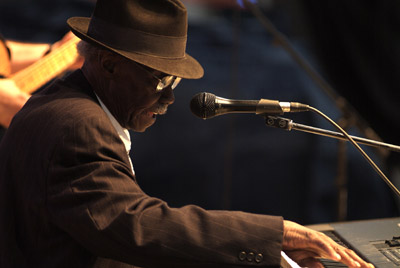
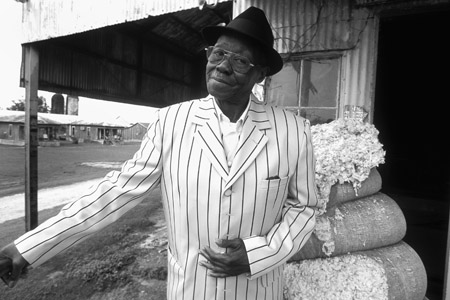
We’ve Lost a Blues Legend – Pinetop Perkins July 7, 1913 – March 21, 2011

Yesterday, legendary bluesman Pinetop Perkins died. Pinetop was 97 years old. He was one of the greatest boogie-woogie piano players ever to strike those keys. I could go on and list all of his awards and accolades because Pinetop has received some of  music’s highest distinctions. He recently received a Grammy, making him the oldest Grammy winner on record bumping George Burns. He had previously been awarded a lifetime achievement Grammy.

But rather than go on and list more of Pinetops achievements, which can be quickly googled, I’d like to share some personal experiences I had with Pinetop over the years. I first met Pinetop and his manager Pat Morgan in 2001 when I was shooting my Delta Bluesmen Project. It was my very first multimedia project where I was shooting still environmental portraits of blues musicians, images and b-roll video of the Mississippi Delta region and interviews of legendary blues musicians from this part of America. I had no idea what I was taking on by myself – I just had this crazy idea that I needed to document these men before they died and I had no time to waste since the youngest was in his 70’s. So, I just decided to do it with the unstoppable enthusiasm of a kid.

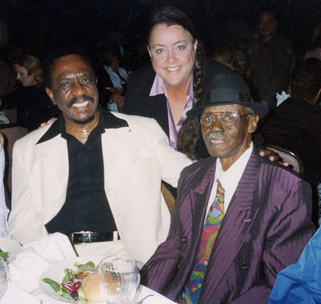
When I first contacted Pinetop’s manager Pat to set up an on camera interview with Pine, she quite firmly rejected my request. Pat was very protective of Pinetop and never wanted to overload him with interviews and fan requests and she had already granted an interview to another filmmaker, so I was out of luck. But I was persistent and Pat finally said that I should come to Pinetop’s homecoming party at Hopson’s Plantation in Clarksdale, MS and get what I could catch of Pinetop there. The day of the homecoming, I was allowed to put a lav on Pinetop to get better audio of his interactions with people throughout the day. One reason Pat thought the homecoming would be a good opportunity for me was because Ike Turner was going to be there. Pinetop had taught Ike to play piano during the 1940’s when they were both working at Hopson’s Plantation and this was going to be a true homecoming.

I put the wireless on Pinetop and kind of forgot about it as the day went on. I was roving around the plantation getting great b-roll and then went into the commissary where there was a big music jam going on. I had taken my earphones off outside, but quickly put them back on to protect my hearing in this incredibly loud environment. I dialed the audio way down on the camera mic but Pinetop’s wireless was still loud and clear. All a sudden I heard Pine and Pat talking about giving Ike a little tour and showing him Pinetop’s old sharecropper shack. I glanced around the commissary looking for them and couldn’t see them – I could just hear them. So, I raced outside, camera in hand just in time to see Pat, Pinetop, Ike Turner and a couple of other people walking across the grounds of the plantation headed toward Pinetop’s shack, just as the sun was setting. I caught up to the group and managed to get some great b- roll and audio of this historic moment. With camera running, I followed them inside the shack where Pinetop naturally sat down at the piano and started to play with Ike chiming in. I was in b-roll heaven and just hoping I was getting it right in camera.

After that little tour was over Pat came up to me and told me that she had worked with a lot of photographers and filmmakers over the years but had never seen instincts like mine. She said she was blown away when I just showed up out of nowhere to film this mini event. Then she told me that if I could come by the next morning, I could get an interview with Pinetop. I did come back the next day and spent a memorable morning with Pinetop on the porch of his old shack. I will never forget that morning – the quiet and the warmth of the place and the man and the moment. You can see some of that footage in this 7 minute sample of my film. The still images and video component of that project is still being exhibited around the country.

I’ve stayed in touch with Pat and Pinetop over the years. In 2005 when Pinetop was awarded the Lifetime Achievement Grammy, the producers used some of my interview footage of Pine in his tribute film. I was there with Pinetop and Pat and a whole lot of rock legends like Jerry Lee Lewis, Ike Turner and Jimmi Page. Another memory etched in my mind.

The last time I saw Pinetop was at the Arkansas Blues and Heritage Festival (aka King Biscuit) in 2009. We were driving somewhere with Pat and she noticed that we had a small army blanket in our car and asked to borrow it for Pinetop that evening. It was a chilly October evening and she didn’t want Pinetop (95 years old then) to get cold that evening as he waited in the wings to go on stage. That night when I was shooting from the photo pit I saw Pinetop sitting just off stage with my army blanket wrapped around him and his customary cigarette hanging out of his mouth. I thought for a second, “I hope he doesn’t burn a hole in my blanket” and then I quickly thought that I wouldn’t mind if he did. In fact if he did burn a hole, I’d be reminded of him every time I saw it. The blanket was returned unscarred – but I still think of Pinetop every time I see that blanket in the back of my car.

I’ll miss you Pinetop. But I sure am glad I got to know you. We’ll always have your music and the wonderful memories you gave us all.

Add to FacebookAdd to DiggAdd to Del.icio.usAdd to StumbleuponAdd to RedditAdd to BlinklistAdd to TwitterAdd to TechnoratiAdd to Yahoo BuzzAdd to Newsvine

Some Useful Information for Workflow

I made a few new discoveries this past week.  Forgive me if these items aren’t new but they’re new to me.

One item I discovered was Drop Box and the timing was perfect.  Drop Box is a sharing and storage site.  I can upload files and documents to their server and share those files with anyone who has Drop Box installed on their computer. For instance, I am able to share project files and updates with the editor that I am working with on Opening Our Eyes.  This past week, I was working on a new trailer for my film and I was able to share that updated project file with him, along with the RF music that I licensed for it.

The other thing that I love about Drop Box is that I can share files and info with the various computers that I work on.  No more emailing docs or copying media to a DVD so that I can transfer files over to my laptop.  With Drop Box installed, I can share files, media and calendars with any and all of my computers.  As a bonus, Drop Box acts as an off site storage solution as well.

My other discovery was a royalty free music site called Neosounds. I’ve been searching through hundreds of royalty free music libraries over the years and Neosounds is definitely the best source for high quality music that I’ve found.  It stands out amongst the rest because their music doesn’t sound like royalty free music.  Recently, I needed  music for a new trailer that I was making for OOE and I was googling around for some cinematic sounds. I found the perfect background music for my film’s trailer.  I’m still tweaking the trailer a bit, but you can listen to a clip of music from Neosounds that I used in a short video I made that appeared on a recent blog post.

One last item that I’ll mention is a great source for travel guides – the unconventional type. They are called Unconventional Guides and are brought to you by Chris Guillebeau. Since discovering Chris Guillebeau’s blog The Art of Non-Conformity, I’ve become a huge fan of Chris and his writings.  If you haven’t discovered Chris’s blog , then do so. He has an amazing outlook on life and he articulates his thoughts  so beautifully in his blog.  His global view of the world and how to live life is truly an inspiration to me.  He’s definitely, a kindred spirit.

Back to tweaking.  Stay tuned for my next blog with links to some new samples.

Add to FacebookAdd to DiggAdd to Del.icio.usAdd to StumbleuponAdd to RedditAdd to BlinklistAdd to TwitterAdd to TechnoratiAdd to Yahoo BuzzAdd to Newsvine