How a Film Can Make a Difference

I never fully realized the power that is within me to make a difference, until recently.  Last summer, my daughter and I spent time with extraordinary people who were providing homes for orphans, feeding the hungry and curing the ill.  They were all people we met while making a documentary about the change makers in our world – people who are making our planet a better place.

Our goal was to inspire and motivate others as to what they can do to make a difference in their own communities. Our goal was to cause a shift, in culture and in thought – from “what in it for me?” to “what can I do?” We’ve just begun to submit this documentary to film festivals and show sneak previews to small audiences but I can already tell that this film has affected change and the potential it has to move people to action.

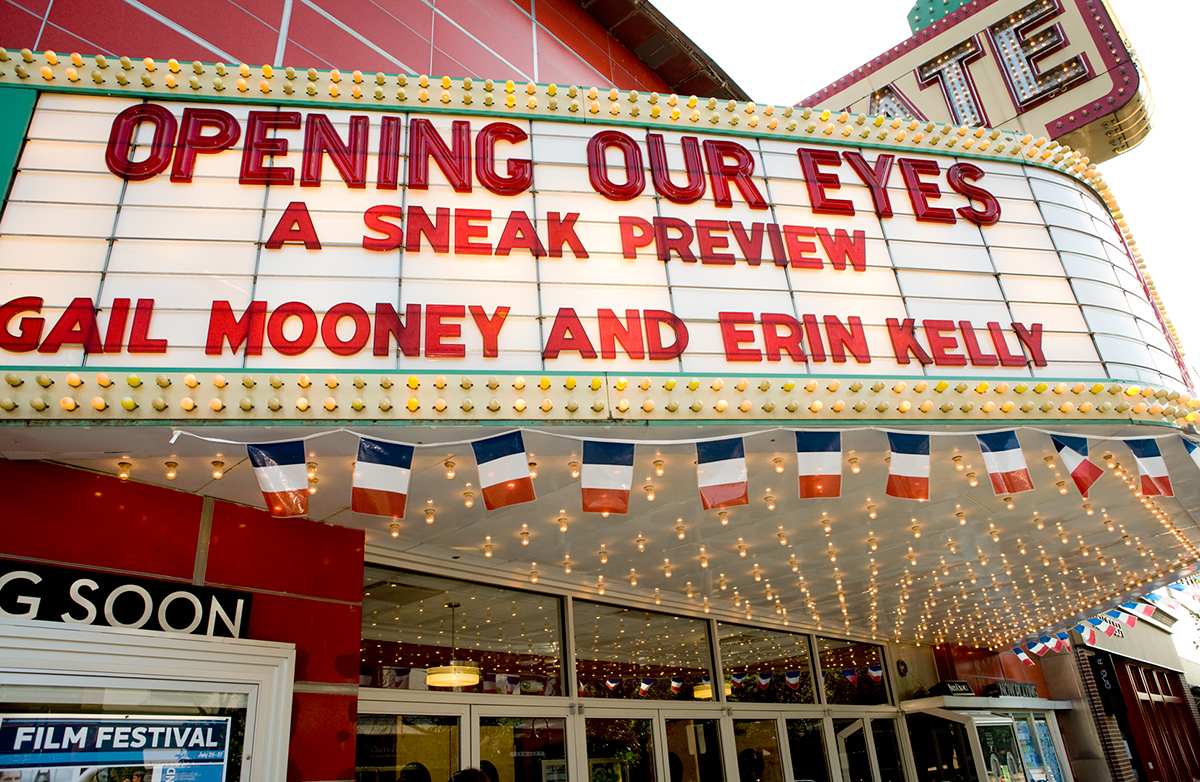
From our first sneak preview at the beautiful State Theater in Traverse City, MI to a recent screening at MIS in Sao Paulo, Brazil, I feel the energy in the room and the collective desire to strive for a better world.  I feel the power of film and the power within me as a storyteller and filmmaker. I feel the time for this film is now and that people are hungry for hope.

Many documentaries take the critical point of view and certainly have more conflict. Opening Our Eyes is different from other docs in that it shines a light on what IS being done to create positive change by individuals all over the world.  Somehow by showing the small acts, this film makes all of us believe that we can create change as well. It empowers us to believe in the possibilities and gives us the hope we seem to be yearning for these days.

When I first conceived of the idea for this film, inspired by friend and neighbor Maggie Doyne, I was looking for some positive hope myself.  I was tired of listening to the hundreds of “experts” on TV talking and all of them needing to be “right” – and nothing was getting any better. That was long before the Arab Spring and the Occupy movements. What I was sensing was the rest of the world was feeling the same way I was and decided to do something about it.

Time will tell if the film continues to create awareness and moves people to action, but at least I’m hopeful again.

Please consider supporting our effort by making a contribution to our IndieGoGo campaign, which only has a few weeks, left to go. And it’s tax deductible.

We can’t do it without your help.

Add to FacebookAdd to DiggAdd to Del.icio.usAdd to StumbleuponAdd to RedditAdd to BlinklistAdd to TwitterAdd to TechnoratiAdd to Yahoo BuzzAdd to Newsvine

Five Top Tips for Emerging Photographers

I talk to a lot of young aspiring photographers these days and invariably I am asked, “What advice would you give someone who is just starting their career in photography? – Is there a future? – Can I make a living?”

I don’t have a crystal ball but I do have 35 years of experience behind me but yet the enthusiasm and outlook of a 25 year old.  I remind myself of what I learned from my mentors when I was just starting out. One mentor, who shaped my career, was art director Adrian Taylor of Travel & Leisure Magazine. Adrian taught me a lot – about magazines, about the story, about style and taste and most importantly he gave me the confidence to believe in myself.  Adrian gave two young, naïve photographers, my partner and myself a chance and in return – we always gave it our all every time we set out to shoot a story.

Add to FacebookAdd to DiggAdd to Del.icio.usAdd to StumbleuponAdd to RedditAdd to BlinklistAdd to TwitterAdd to TechnoratiAdd to Yahoo BuzzAdd to Newsvine

With that said, I would not be where I am today if it had not been for mentors like Adrian Taylor and my greatest joy at this point in my life is to pay that forward to photographers just starting their careers.

  • Learn video – Video is no longer a “specialty niche” or in fact a separate genre at all.  In the very near future – which is already upon us – a photographer will need to know how to shoot both stills and motion – or partner with someone who does.
  • Stay true to what your inner voice is telling you.  For example, if your passion is to be a photojournalist, don’t listen to people who are telling you that photojournalism is dead and that newspapers are a thing of the past.  While “printed” newspapers may be dying out – journalism and photojournalism is not.  Don’t let others’ dogma determine what your path should be.
  • Collaborate with your peers.  When I was first starting out, photographers kept their clients, their techniques and their ideas to themselves.  But I have found that whenever I have collaborated with others – we all push the bar to the next level – each bringing their own strong suits to the project.  As a subject of my film Opening Our Eyes told me “We’ve got to shine each other up.”
  • You don’t need the validation of others to proceed with your idea and make it into a tangible plan and product.  As far as publishing and/or distribution is concerned – the gates to the kingdom are open and the kingdom is the entire world.  We are living in a time of empowerment for the individual and for a content creator that is profound.  If you are willing to do the work – the rewards are bountiful.
  • Act on the ideas that don’t go away.  It’s easy to let resistance sabotage you.  Resistance comes from many places – your loved ones, friends, your peers – but mostly yourself.  Stop talking yourself out of ideas and start acting on the ones that just won’t quit you.

I have made my work my pleasure in my life.  I have always found it difficult to separate the two.  When you feel that – you’ll know you are on the right path.

The Money Game

I’ve learned a lot about the “entertainment” industry in the process of creating our documentary Opening Our Eyes. But I was a bit surprised to learn how one show derives its content. I won’t mention specifics, because I don’t believe that this particular way of doing business is unique to this one show.

A couple of days ago, I received an email from one of the subjects in our film asking for my counsel about a high profile program that is syndicated on various cable channels. The show essentially does short segments on organizations and/or companies that have stories of educational value.

I looked through the electronic info kit that they had sent and it sounded great, because they guaranteed placement for the 5-6 minute piece within the program, which would run on a couple of large cable networks. They also guaranteed a 1- minute spot on CNN and Fox News. Plus the production company would deliver a file ready for web so that an organization could upload it to their site and/or deliver DVD’s to potential funders or clients.

I continued to read the attached PDF’s which listed the production requirements and workflow that would take place if “they” were selected to be profiled. But what stood out and surprised me was the line that stated that a payment of almost $30,000 would be required, if they were chosen to participate. Quite honestly, I was a bit shocked. Here was a production company that was creating a syndicated program and expecting the subjects to finance it.

I’m almost certain that this company also makes a hefty sum from the cable networks who in turn get money from their advertisers. That doesn’t surprise me a bit. But I didn’t know that it had become part of the game to make revenue off the subjects of the stories!

Perhaps that might not sound all that bad because it’s just business in a free economy, but quite honestly it has really changed my thinking about networks that run stories about people, organizations or institutions that have educational value. Now when I watch a show like this, I will question the credibility of the causes and organizations that are being profiled, because I know that this “door to distribution” is only open for those who can pay. And that doesn’t necessarily mean that the stories they run are about the most deserving subjects or even the most compelling stories. It simply means that the people behind these stories had the funds to “pay to play”.

I think back on all the extraordinary people that we met last summer while making our documentary. Most of them would be hard put to find this kind of money and if they did they would probably put it right back into their causes and the people they are trying to help – not a production company that is making money off both ends. I went in the “red” doing this documentary with the hopes that it will cause a shift in the way we think and that it will move people to action to make a difference in the world. I figured that’s the least I could do – use my skills as a storyteller to create a film that would raise awareness and help all our subjects and their programs.
Would I like to make money on this film? I’d be happy if I broke even. I’d be even happier if this film was seen by hundreds of thousands of people. But I wouldn’t dream of charging my subjects money.

Ronni Kahn of Oz Harvest told me “Just go out and do something – not for the money not for the recognition but for the sake of doing”. I suppose that’s exactly what Erin and I did. And that in itself has been the biggest reward of all.

Add to FacebookAdd to DiggAdd to Del.icio.usAdd to StumbleuponAdd to RedditAdd to BlinklistAdd to TwitterAdd to TechnoratiAdd to Yahoo BuzzAdd to Newsvine

Being Yourself

Yesterday, I gave a talk and showed a bit of my film, Opening Our Eyes,

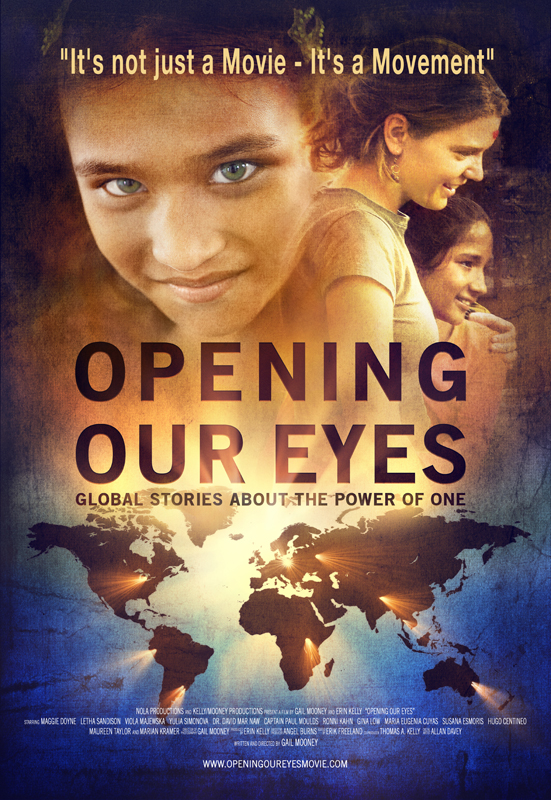
Movie poster for Opening Our Eyes

at the PACA conference in New York City.  I had been asked by ASPP to speak about the making of the film and my plans for distribution.  To tell you the truth, even though I’m always thrilled to show and/or talk about the film, I was a bit nervous with this crowd.  PACA stands for the Picture Archive Council of America and its member include some of the biggest stock photo agencies in the world, including Getty, Corbis, Masterfile and Alamy. I was nervous because part of my message was that I no longer needed the validation or others to get my stories to market.

I thought my message would be somewhat threatening, because I was telling the audience that content creators no longer needed the traditional gatekeepers of the past, to get their stories “out there.”  That because of technology, it was possible for the individual to have a global reach and if one is willing to do the work – the prize is all theirs – meaning the monetary rewards.

I had a tough time slot to speak – right after lunch  –  I knew that I would be dimming the lights for the film and that is never a good thing to do in that time slot.  But, Tom Kennedy had given his very inspirational talk about new media and new opportunities in the  marketplace.  I had heard Tom’s talk  as part of ASMP’s SB 3 series this past year – and I knew that my presentation was a great follow up to his – and in fact it was almost like a case study example of what Tom was talking about.

My presentation went amazingly well and as I looked out into the dimly lit audience as the film was playing – I couldn’t see any closed eyes.  I felt that I made a connection, and that perhaps in some small way, I had made a difference.  Maybe, I just got people thinking about what they could do to make a difference in their own lives.  And maybe I had influence beyond that.  But, I know that I stayed true to myself.  My intent was not to come off as threatening  – but I did want to make people feel a tiny bit uncomfortable.  It’s when we get uncomfortable that we push ourselves to a better place.

My message was simple.  Someone doesn’t need to lose – in order for someone else to win.

Add to FacebookAdd to DiggAdd to Del.icio.usAdd to StumbleuponAdd to RedditAdd to BlinklistAdd to TwitterAdd to TechnoratiAdd to Yahoo BuzzAdd to Newsvine

New Opportunities for Photography

For this post, I’m going to use a very broad definition for “photography”.  I will define photography as any image still or motion shot by any camera – still camera, video camera, hybrid or even and iPhone.

The business of photography has changed with technology. To start with it demands more than just “still captures” in terms of content. These days, our clients are asking us to create stills and motion content and sometimes even 3D.  On top of that technology has made it possible for almost anyone to take a reasonably good picture or video.

So where does that leave us as far as new opportunities in the business of photography? While some look in their rear view mirror and lament the passing of the good old days, I for one have my eye on the possibilities that are open to anyone willing to do the work.

My top 5 pick of opportunities out there:

  • Once Magazine – An online photo magazine made for the iPad. Photographs and video look great on the iPad and Once, magazine shares subscription revenue 50/50 with each issue’s contributors. You no longer need an assignment to shoot those long run stories you love and monetize them.
  • Crowdfunding – With Kickstarter, RocketHub
  • DistributionFilm DIYDistribber
  • Funding and marketing  – Sokap
  • PR and Marketing ToolsTopspin Media
  • Portal for e-commerce (also integrated websites) – Photoshelter

That’s a start.  It’s never before been more possible than it is now to create, promote, market and monetize your “photography.”  Be smart.  Be authentic. Be courteous. Have a plan and be prepared to do the work.  Anything is possible. Validation for your project is no longer necessary.

If you appreciate what I have shared – here’s one last link, a shameless plug to our funding campaign on IndieGoGo for our film, Opening Our Eyes.  If you can, please contribute. If not, please pass along the link.

Marian Kramer, one of our subjects in the film says:
 “We all just have to shine each other up.”

Add to FacebookAdd to DiggAdd to Del.icio.usAdd to StumbleuponAdd to RedditAdd to BlinklistAdd to TwitterAdd to TechnoratiAdd to Yahoo BuzzAdd to Newsvine

Top 5 Business Mistakes Photographers Make With Video

In the last couple of years in the photography world, it seems like everyone is scrambling to learn video.  In particular, still photographers are jumping into this “genre” because their hybrid cameras have the capability of shooting motion.

There are hundreds of seminars teaching the gear, but few point out the differences, when it comes to the “business of video”.

Here’s 5 mistakes I see still photographers make when they leap into motion:

  • 1.  They throw in video as part of the deal and don’t charge for it.  I hear about this a lot.  A client and photographer are on a still shoot and the clients sees that the photographer is shooting with a hybrid camera and asks the photographer to shoot some video clips.  The photographer obliges because he/she can and the money is left on the table.  Remember when still photography went digital and photographers became the labs but didn’t charge for the post-production?
  • 2.  They don’t update and upgrade their insurance policies.  Video production shoots are not covered on most still photographer’s policies.  Be prepared for a jump in what you need to spend on insurance to be adequately covered on video production jobs.
  • 3.  They don’t consider the ramifications when they are working with SAG or AFTRA talent and they are asked to also shoot some video of the talent on the job.  This crosses the line as far as the unions are considered.  While it may be OK for SAG/AFTRA talent to work on a “still” set – when you go into video mode – it’s not OK.
  • 4. They think of themselves as just shooters.  This is typical and is fine in the still photographic world, but in the collaborative world of video production, a shooter is a hired gun with no ownership in the intellectual property.  I like to position myself higher up the ladder as a producer and maintain control over the job and the content.
  • 5.  They look at video as a separate genre.  That’s changing radically as video is no longer a separate niche and genre, but part of almost every photography market from editorial to architecture. Even ad agencies are starting to merge their motion and still departments.

Add to FacebookAdd to DiggAdd to Del.icio.usAdd to StumbleuponAdd to RedditAdd to BlinklistAdd to TwitterAdd to TechnoratiAdd to Yahoo BuzzAdd to Newsvine

Conversation with Director/Editor Erik Freeland

I was extremely fortunate that Erik Freeland of Springhouse Films was the editor on our film Opening Our Eyes.  I learned a lot from Erik through our collaboration.  I thought I would share some of Erik’s insights about the art of editing.

What makes a good editor?

Knowing a little bit about everything. Art history, popular culture, physics, linguistics, music… it gives you more points of reference for understanding and presenting the story. Attention to detail is very important because in the end, nothing goes unnoticed by the audience. I guess I’d have to say patience is tremendously important –– even though computers do amazing things, editing is at its core a tedious process.

We all seem to wear more than one hat these days – do you? If so do those skill sets complement each other and how?

I started in this business as an editor but really wanted to have more control over the material I was editing. I’ve have been fortunate to be able to also have a career as a director. Understanding those two disciplines and knowing what is possible in each allows me to visualize the editing process more during the shoot.

I know from editing projects myself, it has made me a better shooter. For still photographers who may not want to edit their own projects – what tips can you give to them about shooting video and motion?

Don’t cut too soon. Be patient and let a shot evolve.

When shooting a scene or a moment in time, think of it as different framings: the wide establishing shot, a medium shot of the main action or subject and little details that can serve as cutaways to prolong the scene or intercut the other shots while masking breaks in continuity.

Plan your movement of the camera and commit to it. When you start a pan, resist the temptation to reframe the shot mid-move. Keep it moving for long enough to make the shot usable in the edit and cut only if it really falls apart.

Keep in mind how much footage you are shooting vis a vis what you will want to end up with. You don’t want to miss anything important but a lot of redundant footage can really be a liability in your edit.

What does a well-edited film mean to you?

Many things. I think first and foremost, it’s about clear storytelling. It shouldn’t be confusing and leave the viewer behind. The editing shouldn’t stylistically overpower the story. Secondly, the rhythm of the cutting should help move the film and should be sympathetic to its tone. Third, it should move you, surprise you, change your mind, do something… I suppose I could say the same things are equally important in directing a film.

As an editor, you can have a lot of influence over the meaning and arc of a story. How much influence should an editor have? Does it depend on the director?

An editor should exercise as much as they can… without upsetting the collaborative balance. Everyone involved in the film should influence it to the best of their ability. Otherwise, their contribution to the process is short-changed. Of course, every working relationship is different and some are less collaborative.

What makes a good director?

I think some of the same qualities that make a good editor are part of a being good director. Knowing a little bit about everything as a director for instance, allows you to tell many types of stories and immerse yourself in the subject matter. Attention to detail, multi-tasking capabilities, being able to verbally communicate about visuals are of course all important skills. There is also a balance between focus and objectivity. A good director is fused with the film –– totally absorbed in every detail. At the same time, they have to be able to look at it and all decisions objectively and from a distance, almost like the eventual viewer.

What makes a good story?

Characters you care about, conflict and location, location, location…

What’s more difficult – editing a 2 minute piece for the web or a feature length film?

Hmmm, that’s a hard one. Kind of like asking which is better night or day.

Does editing have trends? Maybe you can point out a couple of examples of style over the years.

OK, first I don’t profess to be a film historian but I try to keep up on things. I tend to watch the films I like the most over and over. Technology has certainly created trends in film editing and directing. Advancements in keying technologies, motion tracking and motion capture as well as realistic CGI environments are but some of the major trends that have changed the way films look and are edited. Probably the closest things to trends specific to editing have been related to timing and pacing. The time-lapse of “Koyaanisqatsi” in the early 80’s, the repetition and multiple outcomes of “Run Lola Run” and the quick cutting shorthand jump-cuts and time-compression in Guy Ritchie’s films like “Snatch” have all had a huge influence over the editing of their time.

Somebody Should Do Something

Have you ever been in a situation or with a group of people when something is being discussed and someone says “somebody should do something”? It could be anything from a local school with a bully problem to helping victims of conflicts happening on the other side of the world. I hear that phrase too frequently. I used to say it myself. But the fact is the “somebody” is each one of us.

It seems like everyone is waiting for someone else to do something. There are some days it seems like people are in a stalled mood – everyone kind of waiting to “fix” things. There’s a lot of talk – the pundits on TV – the politicians – the short term capitalists – but nothing seems to be getting done.

I think people are basically “stuck” right now because everyone seems to be looking for that “one” perfect solution. We are so accustomed to thinking that way in our “made for TV culture” we overlook the ordinary simple things we all could be doing.

I’ve had a bit of a shift in my life over the last couple of years where I’ve really started being more conscious of my own actions and how those actions can affect my circle of influence. Just little things – but I know that the way to achieve any big goal is to break it down into little steps. One little thing I recently did was to design a simple cardboard DVD jacket for my film, rather than the traditional plastic case that DVD’s are packaged in. Committed people in grass roots groups like the  Plastic Pollution Coalition, made me aware of the huge problem with plastics and our environment.
The thing I realize though is that “doing something” – anything – is better than waiting for someone else to make things right. It feels good and it’s addictive. It’s probably one of the few addictive things that are beneficial. And it’s empowering.

Go out and create your day.

Add to FacebookAdd to DiggAdd to Del.icio.usAdd to StumbleuponAdd to RedditAdd to BlinklistAdd to TwitterAdd to TechnoratiAdd to Yahoo BuzzAdd to Newsvine

Authenticity

It’s a humid, Saturday morning in the dog days of summer.  There’s a dozen things I should be doing – paying the bills, doing the laundry, filling out film festival submissions and catching up on the endless little details that have consumed me with my film.

And yet, I write.  I started writing about 7 years ago when I would wake up super early in the morning with my mind spinning with ideas and not allowing me to turn over and go back to sleep.  So, I ‘d get out of bed and write about whatever was running through my mind at the time and I would put those thoughts out there in my blog. Colleen Wainwright is running a whole series of interviews with writers on her blog as part of a fund raiser and I was honored to be included.

In the beginning, I got a lot of encouragement from a friend who gave me the confidence to write more and I did. Some days the words would just pour out of me and many times, I’d see them quoted later in other people’s blogs and I couldn’t believe that I had written them – almost like an out of body experience.   Now, writing has become a habit and a way for me to organize my thoughts and turn chaos into order and thus my dreams into realities.

Many people tell me that I’m incredibly open and honest.  I’ve always found that interesting – the fact that was something to comment on – but at the same time feeling very flattered.  If someone tells me that I’m the “real deal”, that’s about as high of a compliment that one can give me.

If “authenticity” comes across in my writing or in the visuals that I create, then I think that I’m must be doing something right, because I use my words and my images to connect with people and that really only happens when I’m being true to myself.  I think people can sense that – it’s not something you can fake.  You’re either genuine – or you’re not.

To be honest, because I am “genuine” and tend to “tell it like it is” – it has been a blessing and a curse – but I can’t seem to help myself.  I’m a sucker for a good cause and I’m one to always strive for consensus as opposed to “getting my way” or motivated by a personal agenda.  When, I’m on purpose and not driven by ego – good things happen – and like-minded people are “attracted” to me like little magnets in the universe.

Now, I’ll go do the laundry.

Add to FacebookAdd to DiggAdd to Del.icio.usAdd to StumbleuponAdd to RedditAdd to BlinklistAdd to TwitterAdd to TechnoratiAdd to Yahoo BuzzAdd to Newsvine

More Stuff I Learned While Making a Movie

The day finally arrived – our first screening of Opening Our Eyes – a film that I have poured my heart and soul into over the last year and a half.  Sounds like a cliché, but this project has consumed me in every way imaginable – good and bad.

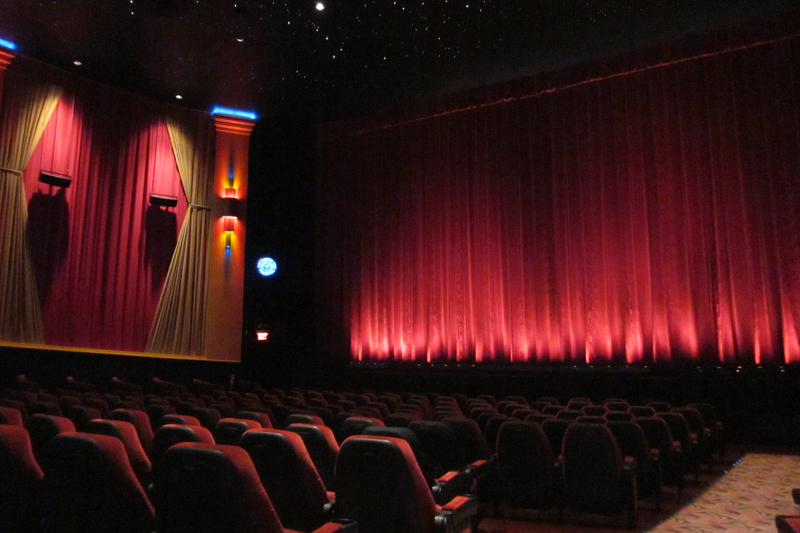
As I looked up at the marquee of the State Theater in Traverse City, MI last Sunday morning, it hit me – we had done it.  My daughter Erin and I had set out to make a film last Spring about people all over the world who were making it a better place – and we did it.

It was and will continue to be a lot of work – a lot more than I ever could have imagined.  There have been some of the lowest of lows and the highest of highs along the way.  There have been times of disappointment from unexpected sources and times of encouragement and support from remarkable people who came into my life because of this project.

I have learned so much since embarking on this journey – here are just a few things:

Believe in your dream.  Lots of us have dreams but most of us don’t really believe in them.  I think that makes all the difference as far as making your dream a reality – the ability to believe that your dream will happen.  I have felt that this would happen from the first moment that I conceived the idea – I saw it – I heard it – This idea picked me – not the other way around.

Trust – I knew all along that for this film to be what I had envisioned it to be – I couldn’t do it alone.  It could only succeed through the support  of all the people who have contributed to this project from the beginning, whether by supporting it financially or just by being there  for me to spring ideas off of.  I really had to open myself up and trust that would happen  – and it did.  That’s not to say that I haven’t had my share of disappointments along the way, but I had to get past them and then learn to trust – again.

Work with people who share your vision.  I used to think I could edit.  but after working with my brilliant editor, Erik Freeland – now I just think I’m a hack.  Finding Erik was a blessing.  It’s not all that hard to find a good editor,  but to find an editor who has the same drive and passion as I do for what this film is or can be – is a rare gift – and I know that. There have been a handful of times in my life, when this serendipity has happened and sometimes, I’ve been too busy to take notice – but this time, I not only took notice – I welcomed Erik’s vision.  Because I was open to what Erik could bring to the film – it’s so much stronger.

Friends – As much as I know that I should never do anything for the sake of other people’s approval, there is always a part of me (my ego) that surfaces and seeks that approval or validation.  Funny thing is that when you create something that is coming from such a sincere place in your own heart – a project that you’re so passionate about – people come into your life because of it.  They are drawn in by your own enthusiasm.  So when others, disappoint you or even take no notice at all – you realize their approval doesn’t really matter.
Chris Guillebeau has a wonderful blog post about this.

Feedback – One reason I had a couple of sneak previews this past week was to solicit feedback.  When I get consumed with the mechanics of making a movie, especially the editing of the movie, I often get caught up in the nit picky stuff, (which is very important) but I need to step back and digest it as the overall movie.  It’s tough when I’m so close to it, so I always solicit other’s input. I know I can’t accommodate everyone’s suggestions because I’d end up with a big mess if I tried.  Some comments ring true and I may take them to heart, while other comments aren’t really along the same line of my thinking,  so I discount them.  Some people’s comments are brutal and cut deep, but after I get past the initial hurt, I realize sometimes, that the comments that cut deepest are the one’s that strike closest to the heart of the matter – and my inner voice takes notice.

Overcoming resistance – The most important thing of all.  I did what I set out to do and that is to make a film that will motivate others and move them to action. During the first Q&A last week, a man stood up and thanked me for making the film.  He told me that he hadn’t even intended to see a movie that morning – he had been looking at the posters announcing the lineup for the TC film festival this week and saw the marquee and came in.  He told me that it changed his way of thinking – that it changed his life.  And then he told me that I needed to screen this film for as many people as possible.  That’s my ultimate goal – to share this film with others – and if one person in every audience reacts that way – well what more could I ask for?

This film may not be perfect and it may not be for everybody (certainly not the cynics), but I did something a lot of others never do – I executed my idea – rather than give myself lots of goods reasons why I couldn’t.   I could cite plenty of reasons right now that could have or should have stopped me in my tracks.  But I didn’t stop because I had such a strong belief in this dream – I saw it too clearly.

Whenever I pull back from my dreams and succumb to my own resistance, I stop and think about a line from a Joni Mitchell tune where she writes about old friends being “cynical and drunk and boring someone in some dark café”.  I stop and I think about that. I sure don’t want to end up being one of those people who piss away their own life by passing judgment about other people’s efforts or causes. And then, I get out and do something.  That’s how I’m making a difference.

Add to FacebookAdd to DiggAdd to Del.icio.usAdd to StumbleuponAdd to RedditAdd to BlinklistAdd to TwitterAdd to TechnoratiAdd to Yahoo BuzzAdd to Newsvine