Looking For People Making a Difference

Maybe it started after seeing James Natchwey speak at Photo Plus Expo – the desire to create awareness with my camera. But I think it started long ago and in fact goes back to my roots and why I wanted to be a photographer. Simply put, I know that a camera can be a powerful tool in bringing awareness to a cause and with that the ability to bring about change.

I’ve always been interested in the power of the individual, those that are so passionate about a conviction they let nothing stop them. One young woman Maggie Doyne who graduated from high school with my daughter 5 years ago, decided to travel instead of going off to college. She wound up in a small village in Nepal and using her babysitting money, started a school/orphanage for Nepalese children orphaned by war. Learn more about Maggie’s Kopila Valley Children’s Home.

But what’s equally impressive about Maggie is that she speaks to students about how they can make a difference, thus planting seeds in the minds of our youth. That’s a powerful thing and each one of those people she speaks to has the potential do something that could make a difference.

This leads me to the point of this blog and how you can help. I’m embarking on an international project – to make a documentary that features people who are truly making a difference around the world. I am currently searching for those people who have a compelling story to tell. For this project, I am not looking for those who are specifically working for an NGO or some type of organization, such as the Peace Corps, because their stories – the stories of those organizations – have already been widely told.

I am searching for individuals who have embarked on their own personal projects to help make the world a better place – people who have followed their passions, ambitions, dreams, to start something that they care about. Their projects do not have to be massive or overly ambitious – it could be something as basic as restoring old churches in Russia. The people can be natives of their country or expatriates, young or old. Ideally, I would like to find 7 people, one on each continent.

So, if you know someone who is making a difference, please let me know.  gail@kellymooney.com And if you don’t know someone, please pass this blog along and get the word out virally. My hope is that by using my skills to tell these stories, I will play my part in paying it forward.

Add to FacebookAdd to DiggAdd to Del.icio.usAdd to StumbleuponAdd to RedditAdd to BlinklistAdd to TwitterAdd to TechnoratiAdd to Yahoo BuzzAdd to Newsvine

Do

Robert Frank, “The Americans” and The Road

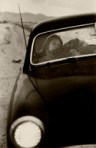
I went to see Robert Frank’s “The Americans” this past week at the Met in New York City. I have always been a fan of Frank, not so much for his fashion photography but his photographic observations of “us”robertfrank_10.T – us Americans, our culture at that time in our history.  He was an observer of “all” people not just the beautiful ones captured on the pages of Harper’s Bazaar, and he captured those observations for generations to come.

As I took my time looking at the prints and contact sheets displayed, I was able to get a glimpse of how he shot – what his camera lingered on and where he went from there.  I could see his thought process in how he made his selections, looking at the frames circled with his red grease pencil. I read his letters to his colleague Walker Evans, another favorite of mine and I got a much better sense of him as a person and photographer.  I watched an early video that he filmed and was amazed by how he pushed his own photographic boundaries into another medium.  The exhibition provided a wealth of insight and information on Frank, his project “The Americans” and a time in our country’s history – and I was captivated.

His images linger in my head and remind me of my beginnings in photography and “why” I became a photographer.  Like Frank, I’m an observer of all people, of cultures and use my camera as a means to capture my observations and share them with others.  My passion is rooted in my own personal road trips; I have taken over the years with my camera. It has triggered in me the desire to explore, to embark on another journey with my camera and see where it takes me.

I’ve spent a career and a lifetime “on the road”, always the traveler, observing and capturing the daily lives of others – not the famous, but the common man.  Not the horrific, the outrageous, the exotic for those reasons  – but because they’re part of the world I live in.  My hope is that I the images I leave behind, will provide others a glimpse of that time, that space, those lives that I stumbled upon during a lifetime spent on the road.

Are You a DP or a Hybrid? – What’s the Difference?

I’m searching for “the word” the “title” of what I am these days.  I’m a photographer.  I also shoot video but I hate the word “videographer” because it sounds a bit cheap to me or at least dated. I generally think to myself that I’m a “visionographer” but I tend to “title” myself as a “media producer”. With all the talk recently about getting into video, I feel the need to make a distinction between being a shooter or a DP as opposed to a producer.

There is nothing new about still photographers moving forward in their careers and segwaying into commercial motion work.  Traditionally they take on the role of the DP (Director of Photography).  Many times they don’t man the camera but direct the shooter instead.  Generally speaking they work in large crews and with agencies.  The biggest distinction is that most times it’s a “work for hire” situation because the production company owns the finished product.

With the explosion of video and in particular web video, come new buyers for this medium.  Buyers from the corporate world as well as institutions and even ad agencies that may have been historically just “print”.  With the advancement of technology and being able to deliver a high end product because of it – leaner and meaner small production companies have come along.  When you have a shooter using the RED and able to deliver not only the motion part of the job but able to pull stills from the shoot, once again still photographers feel threatened.

When I got started in video, I made a conscious decision to take on the producer’s role.  I could choose to shoot or edit or I could delegate these roles to outside contractors.  I could also form partnerships that were fluid as the needs may be.  But more importantly, I maintained ownership of the final product – which was what I was used to coming from my still photographer background.

Still photographers are essentially producers anyway so it’s not such a mental leap.  So when your client comes to you and asks you if you shoot video (and you don’t) think before you answer that with a NO answer.  It may be better to form some partnerships with people who do and not only keep the money in house – but not send your client off to someone who does.

Video and Social Media – A Great Partnership

Facebook hit one billion video views last month. There are four times as many video views as actual Facebook members. That’s astounding. It also speaks volumes about how much video has become a part of our lives. With Facebook, people are sending video messages to “friends” without sharing them globally on You Tube or other video host sites. http://tiny.cc/v3d8K. Social networkers can also embed their Facebook videos on other web sites or blogs.

But if you think one billion video views in a month’s time is amazing, then you’ll be stunned to hear that YouTube gets over one billion views in a day!

And let’s not forget the new iphoneG3 that is not only a display tool for video, but a tool that can create video content as well. And this is not one of the new hybrid still cameras that also shoots video files – it’s a phone!

So between the new tools that create video content, coupled with the new tools that allow us to share video content, video is becoming a new “norm” in how we communicate. And with these new tools it has become easier for the consumer to use video to communicate. Does that mean video professionals should feel threatened. Not at all. To me it means that because video is becoming the new “norm” there is more and more of a demand for it. And that means that for my clients who have only worked in print before, are now finding a need to deliver their message in video to consumers who have come to expect it. And that’s good for me and my business.

Mobile Video Explosion

Apple’s new iPhone 3Gs has had a huge impact on YouTube since it’s debut this month. In fact video uploads are up 400% each day since the new iPhone came on the market. But aside from the impact of the iPhone, YouTube uploads have increased 1700% over the last six months.

Those statistics are not only phenomenal, but could be the tip of the iceberg when it comes to uploading and sharing videos. No doubt there will be a deluge of some really bad videos that will be bounced around.  But just think how this technology can effectively  convey your message or your company’s message – if presented in a creative, and strategic way. When a web video is done well – it can circle the globe exponentially and virally in a matter of hours. Never before has it been as easy to share video.

The downside of course to any new technology or gadgets is that people jump on the bandwagon without first defining what it is they want to do with it – and why. Just like with the rise in popularity of social media marketing, a business needs to determine how and when to embrace these new tools and do so in a way that’s consistent with their brand or message.

Some thoughts on how you can utilize web videos in your business:
1. How to’s or instructional videos
2. Behind the scenes showing how you or your staff work
3. Client testimonials
4. Relaying your company’s message

And remember just because every one is doing it – doesn’t mean it’s right for you. You need to answer that question for yourself.  But if you do embrace video in your marketing efforts – if done right, it can create awareness around the world and it’s never been easier.

Video is Catching

I just returned from giving a seminar to the ASMP chapter in Seattle entitled “Multimedia and Video – New Opportunities for the Still Photographer” http://tiny.cc/rAqxv . Paula Lerner and I take a tag team approach, Paula speaking about multimedia and I speak about video.

I was surprised to hear from quite a few attendees that they have gotten into video and see it as a growth area in their business. Others have been seriously thinking about buying equipment and getting more training because they hear from some of their clients that they have the need for video and multimedia. This is a perfect way for a photographer to expand into another medium and that is to collaborate with an existing client who to date has hired you for still photography, but has also been contemplating new media.

While I’m not advocating on the job training, I do recommend that after you’ve trained and made samples, that the first people you should market to are existing “still” clients. You may not think they have the need because they’ve never demonstrated it, but they probably realize that a medium with sound and movement will bring value to their company.

I was also happy to see quite a few students at the seminar. These are emerging photographers who see the potential in video and want to know more about it.

Every month, I see more sites that host video and more companies using it. I think it’s safe to say that video isn’t just a trend but another way to visually communicate.

Sharing and Collaboration

Still photographers for the most part are independent creatures – usually working as a solo act. One of the joys of working in both mediums – video and photography is working with other creatives each bringing their own expertise to the end product. I’ve worked with sound people and editors on projects who brought their skills to many projects I’ve produced – each time making the end result better and stronger.

With technology moving ahead like the speed of sound, collaboration and partnerships is one way to keep up. Better to bring in associates who have know how in areas that you don’t in order to get your project to the necessary platforms in a timely way.

Along with collaboration comes the notion of sharing – sharing information, skills etc. Before all the blogs and social networks, sharing was considered by some to be giving away their secrets. Perhaps that is true, but I have found time and time again that when I have been open with my ideas, good things have come my way. Not always in the immediate sense, but ultimately everytime I have “given” I have received a lot more in return.

A few years ago, I read a book on this topic called “Wikinomics” http://www.wikinomics.com/book/. It opened my mind to the possibilities of thinking and working in this way.

So be open to the idea of working and sharing with your peers and I’m confident the returns will bring great rewards.

More on NAB

Just returned from the NAB show in Las Vegas. NAB is the National Association of Broadcasters and every year they put on a show where 100,000 plus attendees come together to share information, exhibit new products and network. Quite simply it is one of the biggest shows of its kind – it’s also an overwhelming experience.

The trade show in and of itself is 5 buildings of everything from cameras, to software to satellite dish equipped hummers for network news teams to embed themselves in war zones. While an amazing display of toys and tools, if you don’t have a plan or a mission with what you want to check out – you’ll be lost.

But the draw for me is that it is the gathering of some of the biggest and brightest minds in the communications business. There’s a host of training sessions and niche sessions for engineers, animators, DP’s, editors etc. And then there are the Super Sessions which I like to attend. These sessions are basically discussions and interviews with some of the movers and the shakers in the biz. One session had a back and forth dialog with the CEO of Adobe and the CTO (chief technology officer) of Disney about a new partnership venture. Another session was with Indie filmmakers, another with the DP of the TV show 24 and another session was with Malcolm Gladwell, author of “The Tipping Point”. It’s an interactive experience with the panelists, the moderators and the audience and a clear example of the benefits of sharing and disseminating knowledge.

And then there’s the random conversations that I found myself having with Hollywood producers and heads of major manufacturing companies when sharing a table in the cafeteria.

But at the end of the day, what resonated most and surfaced amongst all the packaging and fizz was that everyone was fixed on ideas, content and the story. Essentially beyond the trends and the hype – all agree that storytelling is still key and paramount to the success of any content created.

It’s easy to get sidetracked and distracted by all the toys and lose focus on the message. As a “means to an end” type of person I try to keep in mind what it is I am trying to communicate and pick the tool that does that best.

NAB thoughts

I’m at the NAB show now and there is so much to see and learn that I’m quite overloaded right now. However, I just sat in on a panel of indie filmmakers and they were all completely in love with the new Canon hybrid camera – 5DMarkII. What they liked was the ability to shoot with very shallow depth of field. Of course this is no surprise because they are coming from a film background – just as many still photographers. What they didn’t like – not being able to shoot at 24P and not being able to shoot in manual mode. Other complaints were that it was not a great tool for motion – and you had to use fast cards or you’d get drop outs.
With all that said – there is a tool for every need. This would never be a tool for a corporate shooter or a video journalist because of the limitations in audio.
Another very interesting topic came up as to ethics. Many people use this camera where video cameras are not allowed, but still camera are. Basically, they are ramboing it. One made an interesting point that at the NFL games which are shot by union video guys as well as a battery of still photographers – the have banned the canon 5dMarkII because they were afraid that still shooters would be shooting video.
We live in interesting times and more to come. Gotta run and fill my head with more info.

How I got to be a hybrid

I’m headed out to NAB next week. Every year the National Association of Broadcasters holds it’s conference in Las Vegas – one of the largest conferences in Las Vegas. It’s a great place to find out about new toys and polish your skills through some of the seminars.
I’ve always been a “means to an end” type of person. So when I go to a show like the NAB, I’m not attracted to the new gear as much as I am to new ideas and opportunities in the way of video.

I’ve often been asked by my peers (fellow photographers) how and why did I get started in multimedia and video. The short answer is – I had a story to tell that needed sound and motion. About 10 years ago I was shooting a story that I pitched for Smithsonian Magazine about swing dancing. You can imagine the challenge of illustrating this story with a still camera. I got through it dragging the shutter and other “motion” techniques”. Shortly after that assignment, I read an article in Time Magazine about how technology was enabling people to create “films” without Hollywood size crews and budgets. In the article, a mention was made about an upcoming DV symposium to be held at the American Film Institute in LA. I followed the lead and headed out to LA for the conference. Those 4 days rocked my world and filled my head with the possibilities that new technology was creating in the visual world.
I am a storyteller and I use the tools that allow me to tell the story in the best way I can. For a long time, I had in my head an idea that just wouldn’t go away. I was very interested in doing a story on the Delta blues musicians. A lot of stories had been done about their music, but I was interested more in where these musicians came from, culturally and geographically speaking. I knew that I had to add the dimension of sound to communicate the message – let’s face it – it’s a story about musicians. So, my foray into video officially began.

I’ve learned a lot since then and am still learning. Technology pretty much mandates that we keep learning because nothing is static. I have taken numerous courses along the way, but perhaps the best was The Platypus Workshop given by Dirck Halstead and PF Bentley. I would recommend this to anyone thinking of moving into video. www.digitaljournalist.org

We live in an amazing time. While some people lament the past and fret the future, I welcome new opportunities and new ways to do what I do – tell the story.