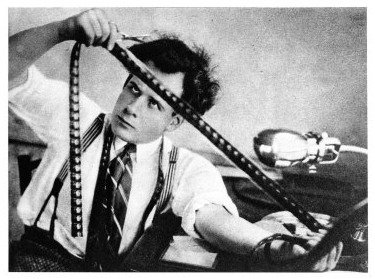
Editing a Trailer

Like anything else the best way to learn how to do something is to “see” how it’s done.  I wanted to create a trailer for my documentaryI’m working with a professional editor on this project but while he is getting acquainted with over 160 hours of footage, I wanted to challenge myself to see if I could create a trailer.

For me, it’s always much harder to edit a very short piece. Everything becomes more critical – every cut – every shot – every sound bite and sound effect – every slate and every high and low in the music. And trailers are the ultimate shorts. You need to peak someone’s interest and make them wanting more.

I started paying attention to the trailers on DVD’s and online. I watched them to see how they were constructed. I analyzed them and paid close attention to things like sound effects, music and slates and if it made me want to see the movie.  There were a couple of trailers in particular that I really liked, each for different reasons.  One trailer was for the film I Am.  This trailer gave me some ideas on how to use music and text to deliver the story idea in a concise way and get people’s attention. I also liked it because it was just vague enough to intrigue me but not to confuse me.  Another trailer I like is Dennis Connor’s Breaking Boundaries; the Art of Alex Masket.  There are a lot of things I love about this trailer.  Dennis’s subject Alex Masket couldn’t communicate verbally so Dennis blended visuals of Alex using other people’s sound bites as the narrative.  He also had a beautiful jazzy musical score composed for the trailer.

My challenge was that I had to make a trailer for a film that was about 11 stories. The first thing that I needed to remind myself was that it really wasn’t about  11 stories.  It was about 11 people but ultimately one story.  With that thought I started pulling together  my strongest sound bites.  One benefit of spending all that time editing the past few months was that I was very intimate with the interview footage and I knew where to look for the gems.  I was looking for provocative remarks that left one wondering and they needed to be short and to the point.

Once I got the stand out sound bites on a timeline I started looking for some live action footage and other b-roll.  Then I began to interweave the appropriate visuals with the sound bites – pacing them – giving the piece a bit of time to breathe.  I also added slates with text to help tell the story.

Once I got it down to a reasonable length – in my case 3:45 – which is still a minute too long – I started looking for the perfect music.  I came across Neosounds.com a royalty free music site with some of the best RF music out there.  Picking music for me is like picking wallpaper, going back and forth until everything starts to sound the same.  After making a few painful decisions, I integrated my musical choices into the timeline.  There was still something missing and that was sound effects.  There are hundreds of great free sound effects that come with Soundtrack Pro.  I picked a couple of them to boost and emphasize certain spots in the trailer but I wanted to keep them subtle.  For example I used a sound effect of a motorcycle in one spot and a jet engine taking off in another.

What has resulted from this exercise are two variations of a trailer.  I am sharing these both with everyone because I would like feedback. I don’t want to influence opinion here, other than to say one trailer has a bit of more information than the other. One is also 15 sec. longer. Any and all comments are welcome.

Which one should I use?

Watch the links in this order.

http://www.vimeo.com/21241911

http://www.vimeo.com/21376387

Add to FacebookAdd to DiggAdd to Del.icio.usAdd to StumbleuponAdd to RedditAdd to BlinklistAdd to TwitterAdd to TechnoratiAdd to Yahoo BuzzAdd to Newsvine

Some Useful Information for Workflow

I made a few new discoveries this past week.  Forgive me if these items aren’t new but they’re new to me.

One item I discovered was Drop Box and the timing was perfect.  Drop Box is a sharing and storage site.  I can upload files and documents to their server and share those files with anyone who has Drop Box installed on their computer. For instance, I am able to share project files and updates with the editor that I am working with on Opening Our Eyes.  This past week, I was working on a new trailer for my film and I was able to share that updated project file with him, along with the RF music that I licensed for it.

The other thing that I love about Drop Box is that I can share files and info with the various computers that I work on.  No more emailing docs or copying media to a DVD so that I can transfer files over to my laptop.  With Drop Box installed, I can share files, media and calendars with any and all of my computers.  As a bonus, Drop Box acts as an off site storage solution as well.

My other discovery was a royalty free music site called Neosounds. I’ve been searching through hundreds of royalty free music libraries over the years and Neosounds is definitely the best source for high quality music that I’ve found.  It stands out amongst the rest because their music doesn’t sound like royalty free music.  Recently, I needed  music for a new trailer that I was making for OOE and I was googling around for some cinematic sounds. I found the perfect background music for my film’s trailer.  I’m still tweaking the trailer a bit, but you can listen to a clip of music from Neosounds that I used in a short video I made that appeared on a recent blog post.

One last item that I’ll mention is a great source for travel guides – the unconventional type. They are called Unconventional Guides and are brought to you by Chris Guillebeau. Since discovering Chris Guillebeau’s blog The Art of Non-Conformity, I’ve become a huge fan of Chris and his writings.  If you haven’t discovered Chris’s blog , then do so. He has an amazing outlook on life and he articulates his thoughts  so beautifully in his blog.  His global view of the world and how to live life is truly an inspiration to me.  He’s definitely, a kindred spirit.

Back to tweaking.  Stay tuned for my next blog with links to some new samples.

Add to FacebookAdd to DiggAdd to Del.icio.usAdd to StumbleuponAdd to RedditAdd to BlinklistAdd to TwitterAdd to TechnoratiAdd to Yahoo BuzzAdd to Newsvine

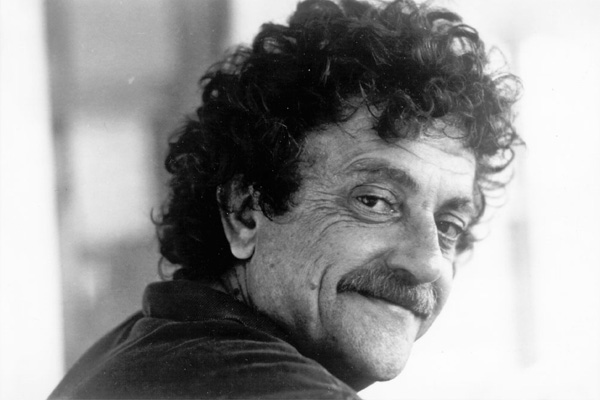
Editing Tips From Kurt Vonnegut

Recently I came across a blog article entitled “Writing Tips from Kurt Vonnegut” which was posted on Melody Godfred’s blog “Write in Color”. It was short and sweet and to the point, listing 8 great tips. Two of those tips really resonated with me because at the time I read them, I was entrenched in editing my documentary and I was struggling with a couple of story issues.

  • Write to please just one person. If you open a window and make love to the world, so to speak, your story will get pneumonia.
  • Start as close to the end as possible.

For the most part when I write I’m usually writing with someone in mind. But I realized when I was editing the 11 stories of this documentary, I was getting caught up in trying to tell too many stories for too many people with their needs in mind. And in the process, I wasn’t getting anywhere in telling the central story of the film. After reading these words of wisdom from Vonnegut, the master of storytelling, I stepped back and envisioned myself with a friend, telling the story of my film and it became clear what I needed to do.

One thing I’ve always done when editing video is to create the beginning and the end first and then fill in the middle. So when I read the tip about starting as close to the end as possible, it reinforced the idea that I needed to have a very clear idea on how I was going to end this film. I had already decided that I wanted to contrast the beginning and the ending visuals so I applied this thinking to the story itself.

I get a lot of questions from people about the mechanics of editing video – like how to do certain things in Final Cut Pro or Adobe Premiere – and I answer the best I can. But I also point out that it’s easy to get caught up in what the software can do and forget about the story that you’re trying to tell. My advice is to read as much as you can about the craft of storytelling. I learned a lot about story structure from Blake Snyder’s book Save the Cat. I learned that every good story has a few key ingredients – irony, conflict, resolution, a hero, change – all basic universal themes. Tutorials on Final Cut aren’t going to help your storytelling skills and without a good story – you might just have some “eye candy” to music.

There is just one more tip from Vonnegut that I’ll leave you with – make sure you check out the other 5 tips.

  • Use the time of a total stranger in such a way that he or she will not feel the time was wasted.

Add to FacebookAdd to DiggAdd to Del.icio.usAdd to StumbleuponAdd to RedditAdd to BlinklistAdd to TwitterAdd to TechnoratiAdd to Yahoo BuzzAdd to Newsvine

I Must Have Been Crazy to Think I Could Do It

….But I did.  Last night I shipped 3 hard drives with almost 5 terabytes of media to my editor. After 2 very long months of extremely long days – every day – I got through the “first edit” of my documentaryIt’s by no means finished, there’s a lot more editing needed to cut it down by half, there’s music to be composed and a narrative that has to be written, but I take great joy in the fact that I got through this part of the process – because it damn near killed me.

When shooting a documentary, you don’t work with a script or a storyboard – or at least I don’t.  I have a pretty solid idea of the “story” when I set out to shoot, but there’s always twists and turns with every situation and every interview.  But I love surprises and I make room for serendipity to happen.  What results is a lot of content that needs to be crafted and arced into a story.  And I’ve just finished defining that story and laying the foundation.

It hasn’t been easy.  In fact there have been times when I’ve wanted to walk away from this because it was so overwhelming.  Trying to tie 11 different stories into one, and looking through 150 hours of footage multiple times can be overwhelming for a team of editors, let alone one individual. I’ve also had my share of low moments these past few months with a grant application rejected and a broken promise by a friend, but somehow I got through it.  I got through it because I had desire.

Having a strong desire for whatever it is one wants to achieve is essential.  Many times we say we really want something, but that is far different than having a true desire to make something happen. In order to stick to something (anything) and follow through with it – no matter what – that desire must be strong and come from within.  It’s something that can’t be copied, taught or faked – you either have it or you don’t. It comes when you are true to yourself.

It’s hard to stay true to yourself.  Many times, well meaning friends or spouses try to distract you from your purpose.  I see this happen a lot when a significant other, who may not understand that in the creative world, the line between work and pleasure is quite blurred and sometimes may feel somewhat resentful of all the time their partner spends on “work”.  I’m lucky in that my husband is also my business partner and has a full understanding of those blurred lines between work and pleasure.  He also knows that when I have such a strong desire to do something, that he shouldn’t get in the way of me following that desire.  That is truly selfless and well meaning.

Since beginning this lofty project, I’ve gotten a lot of calls from people who are in a slump for one reason or another.  They look to me for some kind of guidance.  I don’t really know what to say, other than to tell them to listen to their true self – the one underneath the clutter of the ego – and to trust what it tells you. If I get one of those calls during one of those low moments in my life, I try really hard to stay positive even though I feel like a big fake, because I’ve temporarily succumbed to my own self doubts.  At those times, I try to be utterly honest, relaying the bitter with the sweet and say that bad times don’t last forever. But you have to let your spirit shine.

I wrote a blog once about the human spirit. I feel that the spirit inside me is ageless.  I know when people come up to me and say “you look good” – what they really see is my spirit – which never gets old because I keep it alive. When I’m true to myself, my spirit soars and I look back at my defeats and rejections with a different understanding and acceptance.

So today, with my spirit in tact and my desire ever so strong, I rejoice in the fact that I accomplished something – something that’s really meaningful.  That brings a big smile to my face and great joy in my heart.  What a feeling – it’s priceless.

Add to FacebookAdd to DiggAdd to Del.icio.usAdd to StumbleuponAdd to RedditAdd to BlinklistAdd to TwitterAdd to TechnoratiAdd to Yahoo BuzzAdd to Newsvine

Open Yourself to Possibilities

Thank goodness February is over. It’s been a long, cold, snowy winter here in New Jersey and February felt particularly brutal.  I can cope with cold weather pretty well but “cabin fever” can be deadly for me. And last month it almost killed me.  I had been in isolation editing video for 14 hours a day – every day. It was almost inhuman.

This weekend I headed down to Philadelphia to present a seminar at

©Douglas Bovitt

ASMP’s SB3.  It was just what I needed.  I needed to connect with people.  Conferences like SB3 are meant for stimulation and learning and everyone walks away with their heads exploding with new ideas – attendee and presenter alike.  But I walk away with so much more. What I get from interacting with people, learning from them, sharing with them is immeasurable.

Some things that stuck with me:

“Be awesome” Colleen Wainwright

“Hang out with people better than you” Blake Discher

And from Tom Kennedy
F.A.I.T.H

Freedom – to see – to be open to opportunities
Authenticity – be yourself
Intentionality – live intentionally – be proactive
Trust – in yourself
Hospitality – be open to the world

And I learned about a blog that truly resonates with me The Art of Non-Conformity
As all the conversations still run through my mind, I remember one in particular.  I was speaking with someone who had taken his own path – traveling a lot before going to college and pursuing other passions in life before settling down on a career.  He wanted to know if I would mentor him but he had so many questions, he was concerned he would infringe too much on my time. I smiled and told him that I was quite accessible and to feel free to call anytime. And that I’d let him know if he was wearing out his welcome He smiled back and said, “you have a hard time saying no don’t you?” My answer to him was “yes” and that I liked that word much more.  It opens up so many more possibilities.

If you haven’t attended on of the three SB3 events – there’s still one more in Chicago April 1- 3.  Check out what people are saying on Facebook. And then come and join us in Chicago and prepared for lots of “ah ha” moments. It could be life changing.  You just never know.

Add to FacebookAdd to DiggAdd to Del.icio.usAdd to StumbleuponAdd to RedditAdd to BlinklistAdd to TwitterAdd to TechnoratiAdd to Yahoo BuzzAdd to Newsvine

Editing 150 Hours of Footage From a DSLR

As I roll away the miles, driving the ten hour trip to Michigan to rendezvous with my daughter Erin to film the last of our subjects for our documentary Opening Our Eyes, I realize how desperately I needed a long road trip – just cruising down the highway.  I have been in utter isolation for the past month, editing over 150 hours of footage that we had shot over our ultimate road trip around the world this past summer.  Little did I know that the 99-day journey would be the easy part of this project.

This past month there have been many times that I became so overwhelmed with the process of editing that I wanted to throw my hands up in surrender and just give up.  But somehow I plowed through it, many days putting in 14 plus hours.  I was on a mission and listening to the words of my subjects got me through it.  After all these were some of the most inspirational people I had every met, so revisiting them through their interviews was a constant reminder of the goal of this film which is to create awareness and inspire and motivate others to make a difference and create change.

Ultimately, my challenge is to take ten (soon to be eleven) different stories of people across the globe who are making a positive difference in the world.  After finally getting the tedious tasks finished, of transcoding files and sorting through the good from the bad clips, I arrived at a point where I needed to start telling “THE” story.  Meaning I needed to determine how I could best structure the film to convey the common themes between my subjects.

In order to see the story clearly – I needed to get away from the technology. So as the miles roll by, the story becomes  more vivid in my head.  I see the hero(s), the themes, the commonality and the arc of the story as the stories intertwine.  I won’t give away too much information other than to say that the solution is simple.  They aren’t eleven different stories after all. It’s really a global story about the power of one.  How one individual can create positive change and not only effect generations to come but change themselves as well. It’s a basic human story that resonates with all of us.

When I started writing this blog I was going to talk about editing tech tips. Somehow as the miles rolled by and my head became clear of the intense electronic input from the past month, I not only saw the story, but I felt it.  I had gotten back on track and gotten to the heart of the story.

Add to FacebookAdd to DiggAdd to Del.icio.usAdd to StumbleuponAdd to RedditAdd to BlinklistAdd to TwitterAdd to TechnoratiAdd to Yahoo BuzzAdd to Newsvine

Just Say Yes

This past weekend at ASMP’s SB3 conference in LA, a young woman came up to me and said that I had given her an “ah ha” moment.  I asked her why and she reminded me of what I had said at a panel discussion the evening before.  A photographer had just told a story of how he saw himself in very specific terms as to what type of photography he did – he saw himself as wearing one hat.  But a client came to him with a job that didn’t fit into his norm and so he turned it down.  Then the client came back a few days later in desperation and asked him to please reconsider and he did.  The job ultimately turned into a lucrative and regular gig and he learned a powerful lesson and that was to open his head up more to possibilities.

I was in the audience and the moderator asked if anyone had a response to this story.  I said that I was really into saying yes more at this point in my life and career and that when I did, the universe was opening up and really great things were happening.  I could go on to list a number of examples of some good things that have happened but the point here is that negative energy breeds negativity and positive energy breeds hope and change and positive results.

It’s pretty tough these days to stay positive, with the photographic industry in a state of flux and the lackluster economy but it’s not impossible.  Some things I have found that help me stay positive are simple to implement in your life and others take a bit more practice.

  • For starters, stay away from the groaners and moaners who spend their time complaining.  That negativity is contagious – so get as far away from those people as you can.
  • Find something you do like and cultivate that passion.  It will show.  You’ll start to talk about it and people will be attracted to you because of it.  That attitude is contagious as well but is an attitude that you want to “catch”.
  • Embrace learning.  Growth always has hope and hope will renew your spirit.
  • Learn to let go of the things that don’t work out.  God knows I have had to abandon many expectations but I try to move on and replace them with new ones.
  • You can’t control what others do to you but you can control how you react. Empower yourself with that thought.
  • Think good thoughts in those moments right before you drift off to sleep.  When you are sleeping your subconscious takes over and if you have positive thoughts running through your head just before you go into that subconscious state – that is what will be reinforced.
  • When you are feeling low and nothing seems to be working – find something that is working and be grateful for that.  And know there are certainly others in the world that are far less fortunate than you.
  • Always remember that life is the greatest gift of all.  Embrace it, cherish it and make every day count.

When you say yes, you at least have a chance at a positive outcome.  When you say no – you’ve closed the door.  My reward that weekend was knowing that I gave someone an “ah ha” moment. Who knows what may come out of that?  What a powerful thought.  What a powerful word.

There were all kinds of “ah ha” moments this past weekend in Los Angeles at the SB3 conference.  There’s another SB3 conference in Philadelphia coming up – February 25-27.  Come and join others who embrace the positive notion of growth, hope and change.

Add to FacebookAdd to DiggAdd to Del.icio.usAdd to StumbleuponAdd to RedditAdd to BlinklistAdd to TwitterAdd to TechnoratiAdd to Yahoo BuzzAdd to Newsvine

Collaboration in Video and….

During one portion of my career, I spent a lot of time shooting still photography assignments for magazines like the National Geographic Traveler, Smithsonian and Travel & Leisure, to name a few. I was hired to shoot the images. A writer was hired to write the story.

Every magazine and every story worked differently as far as how I would collaborate with the writer. Sometimes the writer and I would just have a conversation about focus and approach and then we’d be off on our own, each bringing our own perspective to the piece.

Sometimes, I’d be given a manuscript that had already been written and I was expected to illustrate it. This worked well when I, the writer and the magazine would agree on the focus of the “story” and match our talents to that end. But there were times when a magazine would want very literal illustrations of the words, which not only stifled the images but weakened the words. One time I was asked to photograph “the lurkage of limousines.”

And then there were times when I went to a destination with a writer to do a story on that destination and even though we were there at the same time, we came back with different stories. I got my story done on site and the writer did most of his/her work after returning from the destination.

With video collaboration is essential because there are so many facets, each calling for different skill sets. Some collaborations occur simultaneously on set and some later in post-production but all have to work well in order to get to the same end in harmony. Harmony meaning, not just being able to get along but to communicate and work well together as one, but also where each respects each other’s role in the process.

It’s very tricky to assemble the right mix of people, but here are some important things to look for when building a team or even a partnership:

  • Trust – You have to be able to count on someone to do their job. And likewise, you have to also commit to uphold your end of the deal. The team is only as good as the weakest link. That becomes even more critical, the smaller the team is. If you’re only working with one person and you can’t count on them – you’ll be doing the work yourself. It’s important to know that someone has your back.
  • Working Style – While it’s not important for all to be morning people or night people or have similar working styles in that sense, it can be extremely frustrating for all concerned if there are procrastinators on the team. That’s because timing in video production is important for workflow. If someone doesn’t deliver when they promised – it holds up the whole production. We had one situation where a motion graphics artist held the entire post-production up for months.
  • Expertise – Surround yourself with experts. They will make you look good. But remember, just because someone is expensive doesn’t mean they are the best for your job. There could be someone who is more right for the project who is less expensive. Keep style and vision in mind. Talk to potential crew members and get references.
  • Right for the job – The “best” editor in terms of the commercial world might not be the right person for your project. For me, I want to work with an editor that is also interested in the project besides the money it pays. I look for an editor who will also bring a different perspective as to how the story gets told.
  • Bottom line – Work with people you can count on – otherwise the job might not get done.

Add to FacebookAdd to DiggAdd to Del.icio.usAdd to StumbleuponAdd to RedditAdd to BlinklistAdd to TwitterAdd to TechnoratiAdd to Yahoo BuzzAdd to Newsvine

SB3 – Get Inspired

If you haven’t registered for the ASMP Strictly Business 3 conference yet, I would highly suggest that you do so.  They will be held in three locations starting next week: January 21-23 in Los Angeles; February 25-27 in Philadelphia; and April 1-3 in Chicago.

There’s an incredible line up of speakers presenting workshops on pricing, estimating, copyright, workflow, strategic career planning, successful portfolios and branding and video production. I’ll be presenting two workshops: “Thinking in Motion” and “Shooting Video with the DSLR”.

Branding expert Colleen Wainwright will deliver her keynote “Making People Love You Madly: Selling Yourself in a Postmodern Marketplace”.  Tom Kennedy, whom I’ve know since his days at the National Geographic Magazine will give a keynote “Learning New Skills for the Changing Media Landscape”.

This conference series is meant for everyone, not just photographers who are beginning their careers.  In fact, I think that photographers who have been in business for many years will benefit equally, if not more than a shooter who is new to the business.

I have been in business for over 30 years and I have found that one of the most dangerous things that can happen to a creative person,  is for them to become complacent, especially in a business like photography.  It’s even more deadly to become complacent these days in our fast changing world of technology.  We not only need to stay current with our skills, we need to keep our vision fresh.

When I got into video and motion more than a decade ago, I was looking for something to excite me.  I felt that even though my business was successful and that I had accomplished many of my creative goals, the spark was getting dim inside me and at times I felt like I was reinventing the wheel.  So, I set out on a learning curve and have been soaking up information ever since.

I love to learn and I have found that the more I wonder and grow, the better off I am creatively and the more successful I am in business.  I’ve also found that networking and collaborating with my peers has opened my eyes to all sorts of possibilities that I never knew existed.  I think that’s what makes the SB3 conference so powerful – the sharing of information with our peers.  You don’t get that from online learning.

We live in a time where anything is possible.  Come to SB3 in LA, Philadelphia and Chicago and be prepared to be inspired.

Add to FacebookAdd to DiggAdd to Del.icio.usAdd to StumbleuponAdd to RedditAdd to BlinklistAdd to TwitterAdd to TechnoratiAdd to Yahoo BuzzAdd to Newsvine

Listen Up – Audio is Everything

Audio is everything in video. I can’t stress this enough. Most times “capturing audio” is a skill that still photographers don’t have. If your job is on the line – my suggestion is hire a good sound guy. If you’re doing a personal project and want to learn more about getting good sound, here are some tips.

• Don’t use the camera’s internal microphones, except for reference.
• Never use “auto” when recording audio. Turn off the AGC (automatic gain control) on the DSLR cameras.
• Get your microphones in close. For b-roll situations, you can get away with a shotgun mic mounted on the camera. But microphones mounted on cameras can pick up camera noises.
• Use a good wind screen or dead cat when outside. Even if you’re inside, on a windy day, with windows open, you can pick up wind noise.
• Use a good set of headphones. Over the ear is best but earbuds can be used in a pinch. Your audio meters tell you that you’re getting sound, but not if the sound is any good.
• Use shotgun microphones for your interviews. Get them in close to your subject – no more than 1-3 feet away.
• Lav microphones, attached to lapels can be used wired or wirelessly. Be careful with your positioning to avoid unnecessary noise from hair or jewelry.
• Go wired whenever you can. Resort to wireless solution if wired isn’t possible.
• Use an omni-directional or cardiod microphone when you are in more acontrolled situation and you want your sound coming from more directions.
• Don’t cross your audio cords with your electrical cords. This causes a hum that you will detect if you are wearing headphones.

Pay attention to audio. Start letting your ears do more of the work. Every room and situation has its own sound. Listen up.

Add to FacebookAdd to DiggAdd to Del.icio.usAdd to StumbleuponAdd to RedditAdd to BlinklistAdd to TwitterAdd to TechnoratiAdd to Yahoo BuzzAdd to Newsvine