It’s All Connected

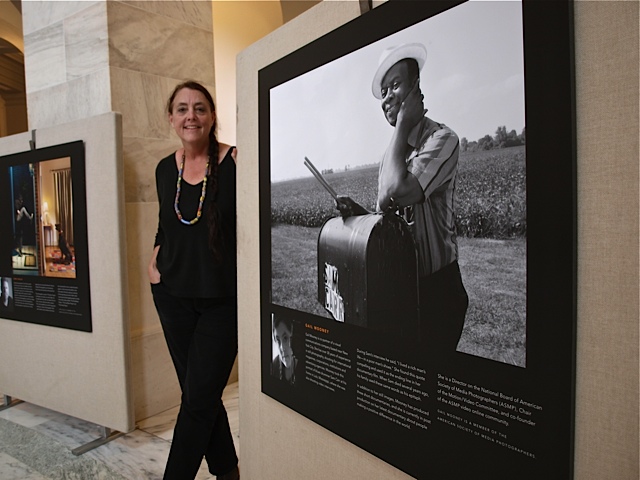
Over the past couple of weeks, I’ve had numerous experiences where things I’ve done in the past have resurfaced in ways I couldn’t have imagined. Last week blues musician Willie “Big Eyes” Smith passed away. He was one of the only two Delta blues musicians still living who had been part of my first short documentary The Delta Bluesmen. That same week, I had a photograph hanging in an exhibit by the Copyright Alliance, Recording Our History: Faces Behind the Camera, in the Senate building rotunda in our nation’s capitol. It was a portrait of blues drummer Sam Carr, who I had photographed and interviewed for that same project, over ten years ago.

I knew if Sam were alive he would have been humbled and honored,

Gail Mooney with her portrait of blues drummer Sam Carr in Senate Rotunda, Washington DC ©Eugene Mopsik

as was I, to have his portrait displayed in such a historic setting. I couldn’t help but “feel” proud at that moment in time. Sure, I felt proud of myself and Sam but I also felt a sense of pride to live in a country where I could still freely walk the halls of the Senate building, past the offices of the powerful of today and the ghosts from yesterday. I didn’t expect to feel that way. I was surprised and comforted that we still have this kind of access to our representatives.

It got me thinking about the trip I took last summer with my daughter when we left the country for 99 days, shooting Opening Our Eyes. We had circled the globe and had visited countries that crossed the spectrum politically, economically and socially. Our journey truly did open our eyes and when we returned to the U.S., it was a big adjustment. What hit me most was that everyone needed to be right, especially in Washington DC. I couldn’t watch TV for months because all I saw was 500 channels of “experts” pontificating and no one was getting anywhere. Worse yet, we all suffer.  I remember a time, when I was growing up during the Kennedy era and we asked what we could do for others, instead of what we could “gain” for ourselves.

It’s a year later and I still don’t watch much TV. I’ve found myself  absorbed back into the “culture” of America. But as I walked through those venerable halls of the Senate building, I was reminded of my purpose. I’m a storyteller. I voice the stories of people like Sam Carr so that future generations will remember the way things used to be. History gives us perspective and we can learn from it – or not. Without perspective – we can’t remain free.

Add to FacebookAdd to DiggAdd to Del.icio.usAdd to StumbleuponAdd to RedditAdd to BlinklistAdd to TwitterAdd to TechnoratiAdd to Yahoo BuzzAdd to Newsvine

A Sad Day

This is out of the norm for this site, but I post this news to remind everyone to live their life each day as if it were their last. It’s a reminder to us all,  to not put off those things you want to do or leave your words unsaid.

I write when I have something on my mind or feel that I have something to say and pass along.  Today, I write because I’m heartbroken.  I need to share some thoughts and then close out.

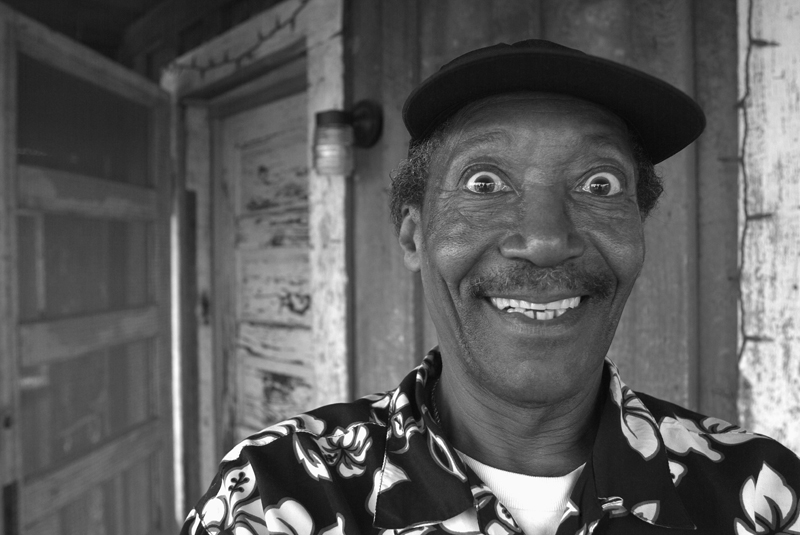
Willie “ Big Eyes” Smith – legendary blues musician, passed away – suddenly from a stroke.  He was one of the seven Delta blues musicians that I interviewed for one of my first short documentaries back in 2002, The Delta Blues Musicians.  They are all gone now – but one.

I’ll always remember the day I sat down to talk to Willie.  It was relaxed and we had the most wonderful conversation, sitting on the porch of an old sharecropper shack at Hopson’s Plantation in Clarksdale, MS.  I feel good that I captured his thoughts and words that day and preserved them for future generations.  I feel that my purpose in life is to do just that – to document, record and capture the peoples and cultures of our times. I feel that is what I am here to do.  When I stay on that course, I have peace inside.  When I drift from that – I don’t feel right.  I think I’ve always known that – but nowadays I try to stay focused on that path.

Willie’s passing reminds me yet again, how precious life is and to appreciate the now.  For the most part, I do live in the now.  I try to live my life as if this may be my last day on earth.  It frees me from a lot of needless fears that stops lots of people from “doing”.  It reminds me to tell my people that I love them because I may not get that chance again.

We all put things off or leave things left unsaid. Seven years ago,  mom died suddenly, without warning. It seems like yesterday because the pain is still real and there is a hole left in my heart.  I remember quite clearly the week before she died.  It was a busy week and I had planned to give my mom a call because it had been awhile.  I never did get that chance – and those words will go unsaid – forever.

We lost another blues legend earlier this year, Pinetop Perkins.  Pinetop and Willie had just won a Grammy for the album “Joined at the Hip” that they worked on together.  I had been meaning to head down to the Delta next month to the Arkansas Blues and Heritage Festival – I had missed the festival last year and I wanted to hear Pinetop and Willie play. Sadly, I won’t get that chance to see and hear them in concert again.  But I do have their records and I’ll always have their words, both on tape and tucked away in the recesses of my mind.

We’ll miss you Willie.

Add to FacebookAdd to DiggAdd to Del.icio.usAdd to StumbleuponAdd to RedditAdd to BlinklistAdd to TwitterAdd to TechnoratiAdd to Yahoo BuzzAdd to Newsvine

Status Quo, Fear and Other Stupid Human Tricks

I went to my town meeting last night. It was a typical “town meeting” where everyone needed to be “right”, and no one was winning. A citizen came up to the mic during the public hearing session and made a statement that really resonated with me. He said “ No one ever wants to change the status quo It’s human nature not to want change. Everyone has their little power centers that they want to hold onto”.

I had a flashback that brought me back to a smoke filled room of dirty dishes with leftover remnants of brown rice and a whole lot of people having the same old discussion of how we all needed to stop “ the War” and change the world. That was almost 40 years ago but I’ll remember like it was yesterday when a “freak” came in and said “Why doesn’t somebody f……. do something? You’re all just sitting around and talking – like the status quo”

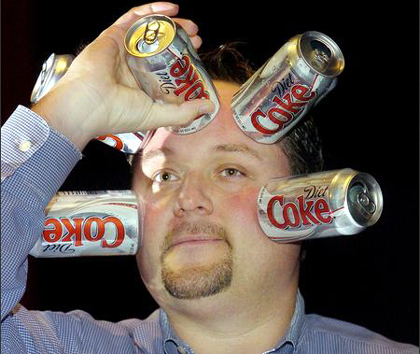
Photo Source Mr. Snodgrass

To be honest, I don’t think there is a status quo. Nothing ever stays the same. You either move forward or drop back, but there is no stepping in place. It’s not sustainable. And that’s nothing new – it’s always been true – but never more than today due to the exponential rise in technology. And it has never been more true in regards to the state of the photographic industry. I see so many photographers paralyzed by their own fears of taking a risk and thinking outside their own boxes.

Few people overcome their fear of change and rise to the occasion of “doing something” as opposed to reacting to something. Most plod along, feeling no control over their destiny – letting fate take its course. A lot of photographers are just hoping to “ride it out” until there is nothing left of their businesses.

Every once in a while, somebody makes a bold move and looks at “change” as an opportunity. History proves me right. If you look back through time, you will see a pattern. At the most pivotal times of change – the cream always rises to the top – and the sludge gets left behind – on the bottom.

As far as the photography industry – I think it’s time to decide if we are ready to “embrace” change and rise to the top or die a slow death. But we have to start seeing the opportunities that always come with change.

Add to FacebookAdd to DiggAdd to Del.icio.usAdd to StumbleuponAdd to RedditAdd to BlinklistAdd to TwitterAdd to TechnoratiAdd to Yahoo BuzzAdd to Newsvine

Conversation with Director/Editor Erik Freeland

I was extremely fortunate that Erik Freeland of Springhouse Films was the editor on our film Opening Our Eyes.  I learned a lot from Erik through our collaboration.  I thought I would share some of Erik’s insights about the art of editing.

What makes a good editor?

Knowing a little bit about everything. Art history, popular culture, physics, linguistics, music… it gives you more points of reference for understanding and presenting the story. Attention to detail is very important because in the end, nothing goes unnoticed by the audience. I guess I’d have to say patience is tremendously important –– even though computers do amazing things, editing is at its core a tedious process.

We all seem to wear more than one hat these days – do you? If so do those skill sets complement each other and how?

I started in this business as an editor but really wanted to have more control over the material I was editing. I’ve have been fortunate to be able to also have a career as a director. Understanding those two disciplines and knowing what is possible in each allows me to visualize the editing process more during the shoot.

I know from editing projects myself, it has made me a better shooter. For still photographers who may not want to edit their own projects – what tips can you give to them about shooting video and motion?

Don’t cut too soon. Be patient and let a shot evolve.

When shooting a scene or a moment in time, think of it as different framings: the wide establishing shot, a medium shot of the main action or subject and little details that can serve as cutaways to prolong the scene or intercut the other shots while masking breaks in continuity.

Plan your movement of the camera and commit to it. When you start a pan, resist the temptation to reframe the shot mid-move. Keep it moving for long enough to make the shot usable in the edit and cut only if it really falls apart.

Keep in mind how much footage you are shooting vis a vis what you will want to end up with. You don’t want to miss anything important but a lot of redundant footage can really be a liability in your edit.

What does a well-edited film mean to you?

Many things. I think first and foremost, it’s about clear storytelling. It shouldn’t be confusing and leave the viewer behind. The editing shouldn’t stylistically overpower the story. Secondly, the rhythm of the cutting should help move the film and should be sympathetic to its tone. Third, it should move you, surprise you, change your mind, do something… I suppose I could say the same things are equally important in directing a film.

As an editor, you can have a lot of influence over the meaning and arc of a story. How much influence should an editor have? Does it depend on the director?

An editor should exercise as much as they can… without upsetting the collaborative balance. Everyone involved in the film should influence it to the best of their ability. Otherwise, their contribution to the process is short-changed. Of course, every working relationship is different and some are less collaborative.

What makes a good director?

I think some of the same qualities that make a good editor are part of a being good director. Knowing a little bit about everything as a director for instance, allows you to tell many types of stories and immerse yourself in the subject matter. Attention to detail, multi-tasking capabilities, being able to verbally communicate about visuals are of course all important skills. There is also a balance between focus and objectivity. A good director is fused with the film –– totally absorbed in every detail. At the same time, they have to be able to look at it and all decisions objectively and from a distance, almost like the eventual viewer.

What makes a good story?

Characters you care about, conflict and location, location, location…

What’s more difficult – editing a 2 minute piece for the web or a feature length film?

Hmmm, that’s a hard one. Kind of like asking which is better night or day.

Does editing have trends? Maybe you can point out a couple of examples of style over the years.

OK, first I don’t profess to be a film historian but I try to keep up on things. I tend to watch the films I like the most over and over. Technology has certainly created trends in film editing and directing. Advancements in keying technologies, motion tracking and motion capture as well as realistic CGI environments are but some of the major trends that have changed the way films look and are edited. Probably the closest things to trends specific to editing have been related to timing and pacing. The time-lapse of “Koyaanisqatsi” in the early 80’s, the repetition and multiple outcomes of “Run Lola Run” and the quick cutting shorthand jump-cuts and time-compression in Guy Ritchie’s films like “Snatch” have all had a huge influence over the editing of their time.

Somebody Should Do Something

Have you ever been in a situation or with a group of people when something is being discussed and someone says “somebody should do something”? It could be anything from a local school with a bully problem to helping victims of conflicts happening on the other side of the world. I hear that phrase too frequently. I used to say it myself. But the fact is the “somebody” is each one of us.

It seems like everyone is waiting for someone else to do something. There are some days it seems like people are in a stalled mood – everyone kind of waiting to “fix” things. There’s a lot of talk – the pundits on TV – the politicians – the short term capitalists – but nothing seems to be getting done.

I think people are basically “stuck” right now because everyone seems to be looking for that “one” perfect solution. We are so accustomed to thinking that way in our “made for TV culture” we overlook the ordinary simple things we all could be doing.

I’ve had a bit of a shift in my life over the last couple of years where I’ve really started being more conscious of my own actions and how those actions can affect my circle of influence. Just little things – but I know that the way to achieve any big goal is to break it down into little steps. One little thing I recently did was to design a simple cardboard DVD jacket for my film, rather than the traditional plastic case that DVD’s are packaged in. Committed people in grass roots groups like the  Plastic Pollution Coalition, made me aware of the huge problem with plastics and our environment.

The thing I realize though is that “doing something” – anything – is better than waiting for someone else to make things right. It feels good and it’s addictive. It’s probably one of the few addictive things that are beneficial. And it’s empowering.

Go out and create your day.

Add to FacebookAdd to DiggAdd to Del.icio.usAdd to StumbleuponAdd to RedditAdd to BlinklistAdd to TwitterAdd to TechnoratiAdd to Yahoo BuzzAdd to Newsvine

The Movie “One Sheet”

If I thought that by finishing my film, I was done – I was sorely mistaken.  My work has just begun.  What would have been the point of putting my heart and soul into a film for the past year and a half, if no one sees it? That means there’s a lot more work on my part, getting it out there – distributing it, marketing it and promoting it.  All that takes time, money and expertise.

I’ve been reading Jon Resiss’ book “Think Outside the Box Office” “The Ultimate Guide to Film Distribution and Marketing for the Digital Era”.  It’s become my bible. For starters, it lays out what a filmmaker needs to do to get their film out there, create an audience and make money.

In terms of publicity, every film needs a good press kit, which should include:
•    One Sheet – with tag line
•    Synopses – long and short
•    Cast and Crew Bios
•    Director’s statement or interview
•    Production stills and video interviews for the electronic press kit.
•    Production stories – something interesting about the making of the film.
•    Technical specs

When I first heard the term “one sheet”, I wasn’t quite sure what that was.  It’s pretty much what it says it is – a one-sheet piece of paper describing your film, but it it’s concise with provocative visuals and a catchy “tag line”, designed to peak interest, whether it is with the press or the movie going public.

A “one sheet” can also be what most of us call movie posters.  They are essentially the same thing – a one sheet with imagery and text to capture someone’s attention.   Some movie one sheets are works of art in their own right and become collectibles.  Think of some of the best ones that you have seen over the years.

Sounds like it should be fun – coming up with a “one sheet” for the movie, but even though I have a lot of great content for a “one sheet”, I don’t have the skills needed to create a composite for a movie poster. There are people who just design movie posters – that’s their niche.

I’ve learned a lot in the process of making a film.  The most important thing, I’ve learned is to make relationships and collaborate with others who can bring their expertise to the project.  It’s not only a rewarding process, but it raises the bar on the final outcome.

Add to FacebookAdd to DiggAdd to Del.icio.usAdd to StumbleuponAdd to RedditAdd to BlinklistAdd to TwitterAdd to TechnoratiAdd to Yahoo BuzzAdd to Newsvine

The D.I.Y. Age

The world is full of possibilities these days.  In fact, for the individual and their “reach” globally – it’s staggering how many possibilities exist that didn’t just a couple of years ago.

We can not only create in a more affordable way with inexpensive equipment and leaner crews – we can also get our creations out to the world without the need for a publisher or a stock agency or a film distributor.

We can do all those things due to the exponential growth of technology.  But we also need to recognize that all those possibilities come with a cost, in terms of dollars as well as man-hours.  Each one of those possibilities takes time and money in order to become a reality.

Even the path to getting money or financing these days has changed because of crowd funding.  But like anything else you need to stand out amongst the noise, so who knows how long this trend can sustain itself.

If you’re planning a personal project, keep in mind that you will need to not only create it but find a way to get it out there after completion.  Expect to put time and money into:

•    Self – Publishing – this includes hiring a designer and researching self-publishing partners like www.lulu.com in the print publishing world. They also offer downloads. In the motion world, you have options like Amazon, iTunes and Netflix.
•    Marketing, PR and advertising – This is definitely an area where you will need money and expertise. Jon Reiss in his book “Think Outside the Box Office” suggests that it will take an investment for at least as much as you spent creating your film.
•    Crowd funding – The crowd funding sites provide you a portal if your project is accepted but you need to do the work as far as getting people to know about your project and fund it.
•    Bookings – Whether it is an exhibit or a movie or a lecture – you need someone to book venues for you.  This could also mean finding sponsors.

The bottom line is really kind of an old fashioned notion in a high tech age and that is – the prize is out there is you’re willing to do the work.

Add to FacebookAdd to DiggAdd to Del.icio.usAdd to StumbleuponAdd to RedditAdd to BlinklistAdd to TwitterAdd to TechnoratiAdd to Yahoo BuzzAdd to Newsvine

Authenticity

It’s a humid, Saturday morning in the dog days of summer.  There’s a dozen things I should be doing – paying the bills, doing the laundry, filling out film festival submissions and catching up on the endless little details that have consumed me with my film.

And yet, I write.  I started writing about 7 years ago when I would wake up super early in the morning with my mind spinning with ideas and not allowing me to turn over and go back to sleep.  So, I ‘d get out of bed and write about whatever was running through my mind at the time and I would put those thoughts out there in my blog. Colleen Wainwright is running a whole series of interviews with writers on her blog as part of a fund raiser and I was honored to be included.

In the beginning, I got a lot of encouragement from a friend who gave me the confidence to write more and I did. Some days the words would just pour out of me and many times, I’d see them quoted later in other people’s blogs and I couldn’t believe that I had written them – almost like an out of body experience.   Now, writing has become a habit and a way for me to organize my thoughts and turn chaos into order and thus my dreams into realities.

Many people tell me that I’m incredibly open and honest.  I’ve always found that interesting – the fact that was something to comment on – but at the same time feeling very flattered.  If someone tells me that I’m the “real deal”, that’s about as high of a compliment that one can give me.

If “authenticity” comes across in my writing or in the visuals that I create, then I think that I’m must be doing something right, because I use my words and my images to connect with people and that really only happens when I’m being true to myself.  I think people can sense that – it’s not something you can fake.  You’re either genuine – or you’re not.

To be honest, because I am “genuine” and tend to “tell it like it is” – it has been a blessing and a curse – but I can’t seem to help myself.  I’m a sucker for a good cause and I’m one to always strive for consensus as opposed to “getting my way” or motivated by a personal agenda.  When, I’m on purpose and not driven by ego – good things happen – and like-minded people are “attracted” to me like little magnets in the universe.

Now, I’ll go do the laundry.

Add to FacebookAdd to DiggAdd to Del.icio.usAdd to StumbleuponAdd to RedditAdd to BlinklistAdd to TwitterAdd to TechnoratiAdd to Yahoo BuzzAdd to Newsvine

The Definition of Insanity

It’s been said that doing things over and over again the same way and expecting a different outcome is the definition of insanity.  I’m not totally sure about that.  I think it depends on what you are talking about and how it may affect other people.

I suppose that if one were to use the example of somebody who consistently breaks promises, yet still expects people to trust him/her – well, then that could support this theory. But, even so. I don’t think they are “insane” – I just think they are self-centered – they don’t consider how they affect others through their actions.

Add to FacebookAdd to DiggAdd to Del.icio.usAdd to StumbleuponAdd to RedditAdd to BlinklistAdd to TwitterAdd to TechnoratiAdd to Yahoo BuzzAdd to Newsvine

But, I look at this statement differently. I’ve learned that just because I make an attempt at something and it doesn’t succeed right away, it doesn’t necessarily mean that I’m insane to try again. Even if I don’t alter what I’m doing or how I approach it, it could succeed if I give it another chance. It could have been that my timing wasn’t right the first time around. If it’s something I believe in, I’ll be persistent in order to make it happen – no matter how many times I have to try.  Doe this mean that because I WON’T give up and I keep trying – I’m insane? If that’s the definition of insanity then I’m insane.

Sometimes, it takes that one person, who is crazy enough to believe in their dream and make it a reality, that makes us take notice.  You know the story of the overnight success and the years it took to get there.  The world is full of people with stories like that – people who just keep trying and hoping for a different outcome – even though they may have failed a dozen times. But they didn’t really fail.  It just wasn’t the right time.

Everything happens in its own time, when it’s meant to happen.  Just because it didn’t work out the way you had hoped the first time – doesn’t mean you’re insane to keep trying and hoping for a different outcome.  When you are true to your core and stick to your beliefs, the right people sense it and come into enter life because of it.   But you have to be crazy enough to think it can happen.

Don’t Re-Invent Yourself

I’ve come to hate the expression “re-invent” yourself.  It’s not only become a bit trite, but it’s caused a lot of unnecessary anxiety.

If one feels that they need to do a makeover, he/she is often coming from a place in one’s life where they feel they have failed.  They may be at a low point in their life, either financially or emotionally and they have the desire to become someone else.

I’ve been thinking that perhaps we all have it wrong.  I don’t think we need to abandon who we really are and try to become someone we aren’t.  That never works. Creatively speaking, whenever I have approached my work as in need of a “makeover”, I have fallen victim to trends.  We all do I suppose, in an effort to “look current”.

That may work for a while, at least financially speaking – but then again maybe not.  I think my best work has come from my true self.  It’s pure but it can be raw. It’s what I just can’t stop myself from doing.  That is what resonates with others.  I think that happens when I am very clear on my vision. It affects people in a primal, yet subtle way.

Maybe we shouldn’t try to re-invent ourselves. Maybe we should just listen to who we really are and trust that voice.

Add to FacebookAdd to DiggAdd to Del.icio.usAdd to StumbleuponAdd to RedditAdd to BlinklistAdd to TwitterAdd to TechnoratiAdd to Yahoo BuzzAdd to Newsvine